PI Planning
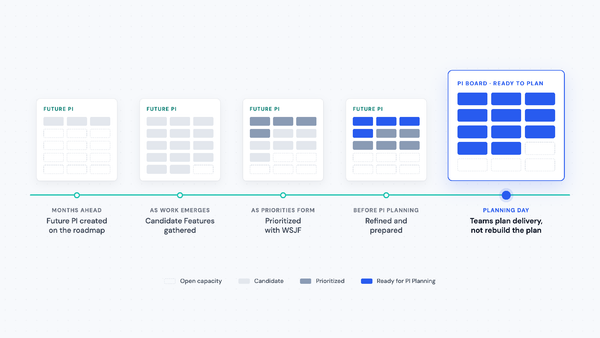
From Roadmap to PI Board: One Continuous Planning Flow
Your next PI can take shape continuously, long before the planning event begins.

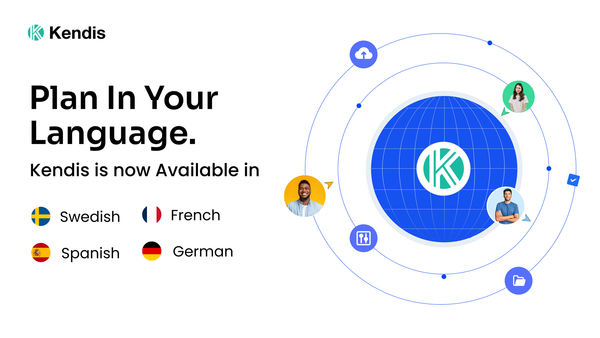
Plan in your team's language. Scaling agile only works when everyone on the train can actually engage with the plan, not just follow along with it. That's why we've rolled out the full Kendis experience in four new languages: German, French, Spanish, and Swedish.
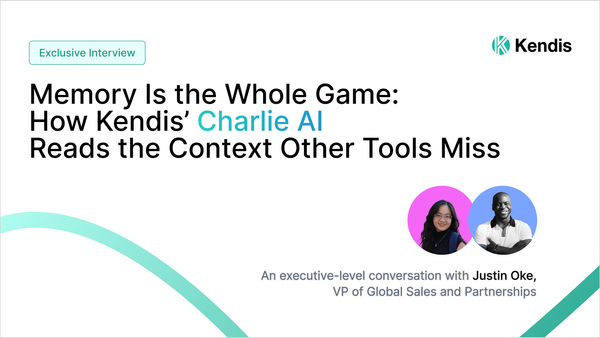
An executive-level conversation with Justin Oke, VP of Global Sales and Partnerships, on why physical sticky-note boards failed remote-first teams, the context that vanishes between one increment and the next, and how AI that actually remembers your programme turns task tracking back into strategic business speed. The
Choosing the right SAFe tool has become harder in 2026, not easier. The Scaled Agile Framework (SAFe) now spans strategic portfolio planning, Agile Release Train (ART) coordination, and team-level execution — and the tooling market behind it has shifted significantly through acquisitions, rebrands, and platform consolidations. This guide compares four
When Agile emerged in the early 2000s, it was a much-needed answer to bloated, slow, waterfall-style project delivery. It brought something refreshing: collaboration over contracts, responding to change over following a plan, people over processes. The goal was straightforward — deliver value faster, better, and together. But somewhere along
Over the years, advancements in ALM tools have significantly changed how organizations approach PI Planning. Teams now have access to more structured backlogs, real-time updates, dependency tracking, and planning artifacts than ever before, with tools that have made it possible to plan across dozens of teams and hundreds of
Modern Agile delivery is full of artifacts. Features, epics, stories, dependencies and more. Each artifact is useful on its own and together, they describe a plan. But no single place truly owns that plan as a coherent narrative. This is the gap that shows up most clearly after PI Planning
If you are already using Kendis for program boards, solution boards, and dependency management, you already understand one core truth: dependencies are unavoidable in scaled delivery. As teams grow, ARTs expand, and delivery spans multiple tools, dependencies stop being simple handoffs and start becoming one of the biggest risks to
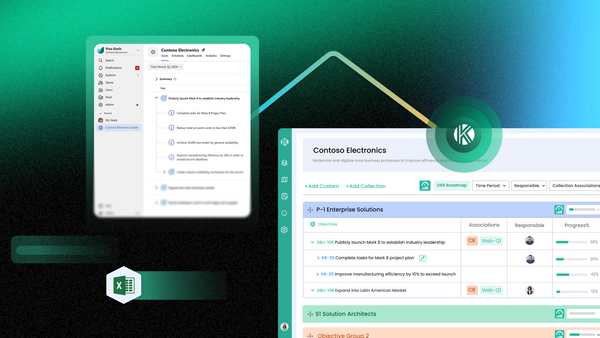
Microsoft's decision to retire Viva Goals by December 31, 2025, marks a critical inflection point for countless organizations committed to Objectives and Key Results (OKRs). While the sunsetting of any core strategic tool can introduce uncertainty, this mandatory transition is, in fact, an extraordinary opportunity. It is the
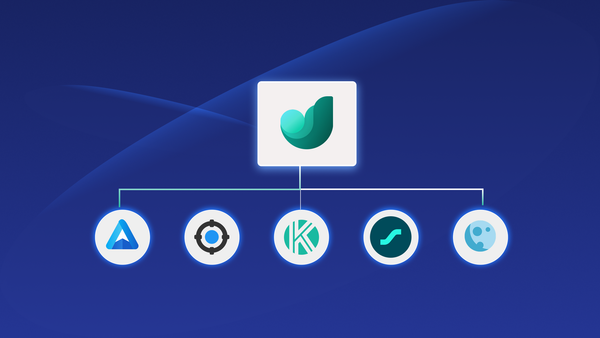
The Best Platforms to Continue and Strengthen Your OKR Practice When Microsoft announced that Viva Goals will be retired in December 2025, many organizations found themselves facing a critical question: Where will our OKRs live next? Viva Goals played an important role in helping teams align around measurable objectives. Its
Get practical tips on improving strategy and execution-straight into your inbox.
When Agile emerged in the early 2000s, it was a much-needed answer to bloated, slow, waterfall-style project delivery. It brought something refreshing: collaboration over contracts, responding to change over following a plan, people over processes. The goal was straightforward — deliver value faster, better, and together. But somewhere along
If you’ve spent any time in a quarterly planning session, you’ve likely witnessed the "Feature Factory" in full swing. The room is filled with backlogs, Gantt charts, and a roadmap bursting with "what" we are building. The mindset is often tactical: if we ship

41% of employees are struggling to fit AI into their daily workflows. And only 6% of individual contributors have received any guidance on how to do it. Read that again. Not 6% who got great guidance. 6% who got any guidance at all. AI tools have never been more capable,
Inspect & Adapt is supposed to be one of the most powerful tools in Agile delivery. Its purpose is simple: look at what happened during the last Program Increment (PI), understand why things went well or poorly, and make concrete adjustments for the next cycle. When done properly, it creates
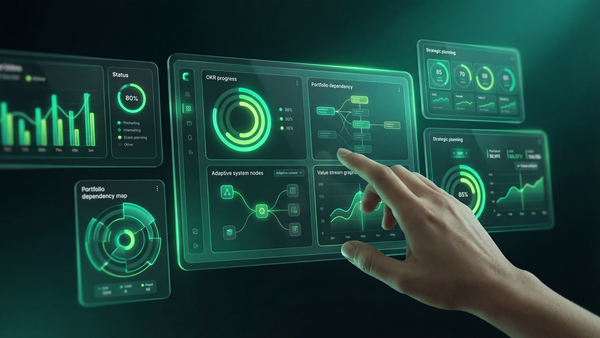
Imagine finalizing a portfolio plan for the quarter, only to discover halfway through that the world has moved on. By the time most strategic decisions are acted on, they’re already outdated. In complex portfolios, execution moves faster than interpretation, and leaders are always a quarter behind reality. This gap
Over the years, advancements in ALM tools have significantly changed how organizations approach PI Planning. Teams now have access to more structured backlogs, real-time updates, dependency tracking, and planning artifacts than ever before, with tools that have made it possible to plan across dozens of teams and hundreds of
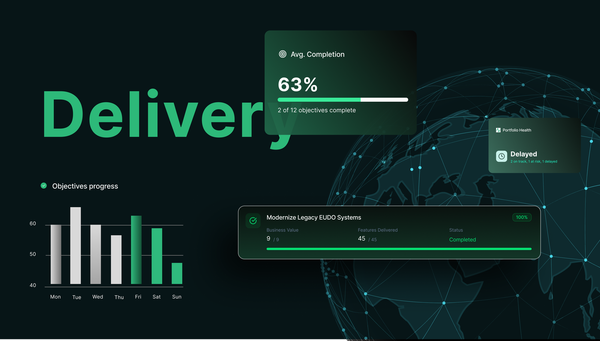
Most Agile teams still measure success the same way factories measure success. “How many units did we ship?” Epics, Features, Stories, Bugs. Tickets. Velocity. Release notes that read like a supermarket receipt. And then everyone wonders why the business isn’t moving. If what you shipped doesn’t change customer
Modern Agile delivery is full of artifacts. Features, epics, stories, dependencies and more. Each artifact is useful on its own and together, they describe a plan. But no single place truly owns that plan as a coherent narrative. This is the gap that shows up most clearly after PI Planning
If you are already using Kendis for program boards, solution boards, and dependency management, you already understand one core truth: dependencies are unavoidable in scaled delivery. As teams grow, ARTs expand, and delivery spans multiple tools, dependencies stop being simple handoffs and start becoming one of the biggest risks to
If you are running SAFe® or Big Room Planning in 2025, you already know the biggest pain point isn't the event itself—rather the post event cleanup. The "Post-PI Hangover" is real. It’s the week-long struggle where Release Train Engineers (RTEs) and Product
The rise of Agile has transformed the way teams work, prioritizing collaboration, flexibility, and continuous delivery of value. For project managers transitioning to Agile environments, this shift can feel like a challenge but it’s also an opportunity to evolve into a new kind of leader. Agile isn’t about
To Program Managers, RTEs, Product Managers, Scrum Masters, and Product Owners, we need to talk about context. You’ve built your Agile Release Train (ART) or Department Collection, you've planned your work, and you’re managing dependencies perfectly in Kendis. But let's be honest: that crucial