From Red Strings to Dependency Chains: Managing Cross-Team Dependencies Beyond the Program Board

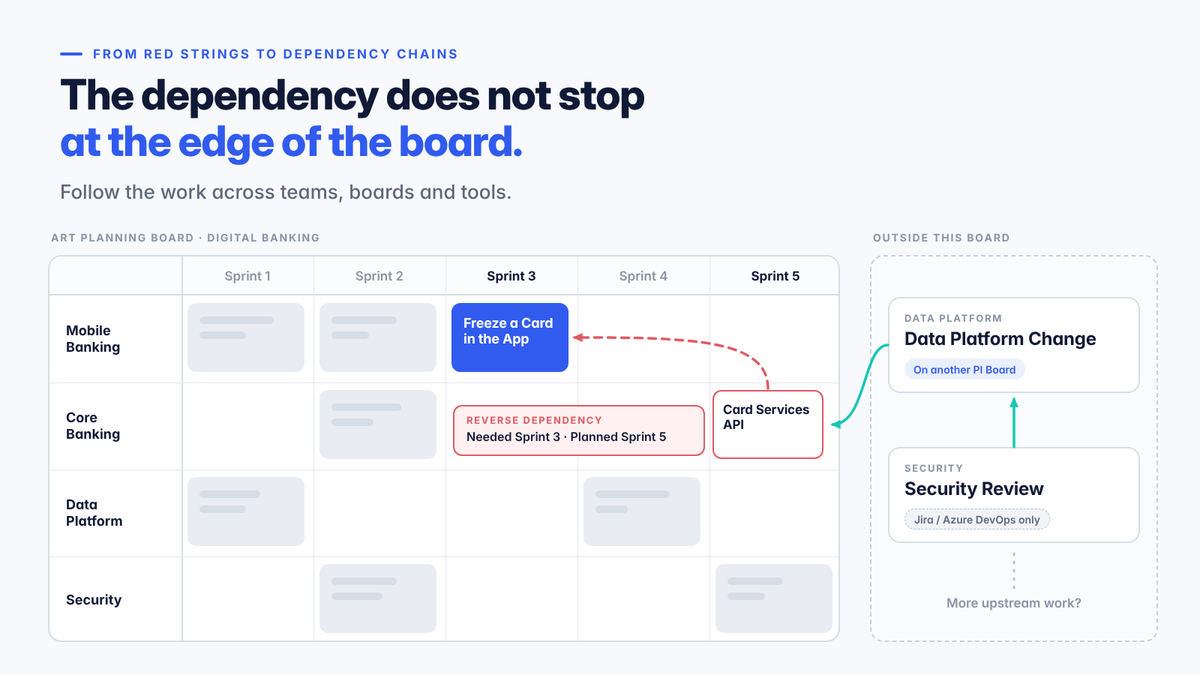
Every PI Planning has its red strings.
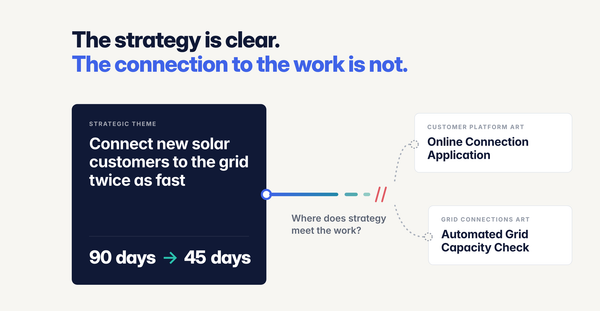
For years, the Program Board on the wall made dependencies visible in the most literal way possible: Features on sticky notes, teams in rows, iterations in columns, and red string stretched between cards that could not move independently.
Today the wall is usually digital. SAFe now calls this the ART Planning Board, while the older term Program Board is still widely recognised. In Kendis, this digital planning view is the PI Board. The red string became a line on a screen.
That line still matters. It shows that one team's work depends on another team's delivery.
But the line is only the beginning.
What is a cross-team dependency in PI Planning?
A cross-team dependency in PI Planning exists when one team needs another team, ART, system, shared service or external group to deliver something before its own planned work can complete. On a Program Board or ART Planning Board, it is usually shown as a link between two pieces of work. But that link is only the visible relationship. Managing the dependency also requires timing, ownership, status and enough context to understand what happens next.
You also need to know:
- Who owns the work on the other side?
- Is that work actually planned?
- Will it arrive before it is needed?
- Does it depend on something else?
- If it slips, what else moves with it?
The problem is rarely that teams do not know a dependency exists. It is that they cannot see what happens next.
One cross-team dependency can put a PI at risk
Imagine a bank running an ART for its digital banking platform.
A new Planning Interval is about to start, and the teams are in PI Planning. The Mobile Banking team commits to a Feature that lets customers freeze a card from the mobile app. The Feature is planned for Sprint 3.
To deliver it, Mobile Banking needs a new Card Services API from the Core Banking team.
Someone draws the dependency.
In Jira it may be a simple is blocked by link. On the ART Planning Board, it becomes a line between the two items. Everyone leaves the room knowing the dependency exists, and the plan looks complete.
Then Sprint 3 arrives.
Mobile Banking is ready.
The API is not.
Looking back, the dependency failed in three different ways. None of them was obvious from the line alone.
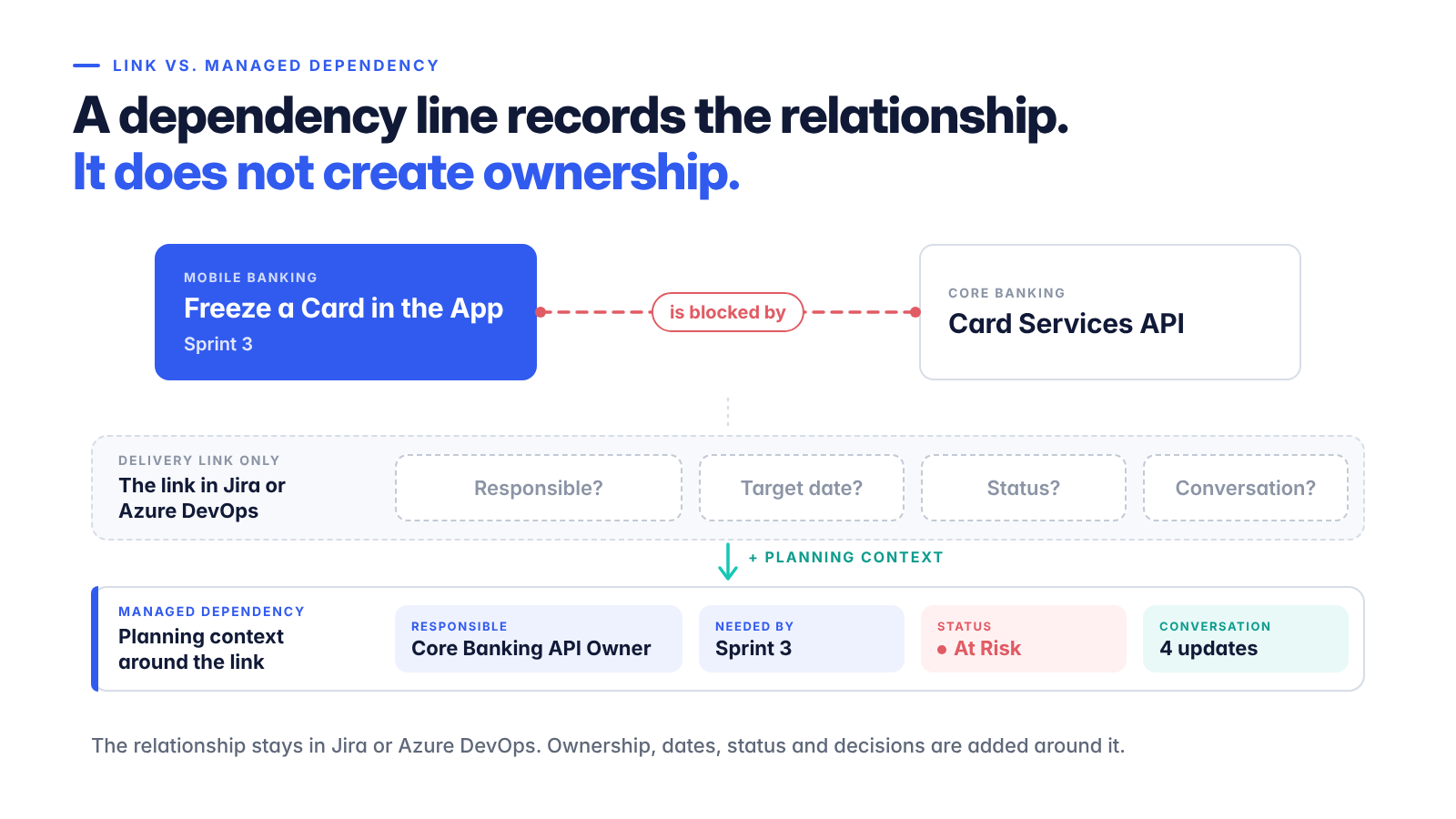
1. A dependency without ownership is only a link
The board showed that Freeze a Card in the App depended on the Card Services API.
It did not show who in Core Banking was responsible for getting the API ready, when the dependency needed to be resolved, whether it was on track, or where the latest conversation had happened.
That is the difference between a technical link and a managed dependency.
Jira and Azure DevOps are the right foundation for the relationship because that is where delivery work already lives. Creating a second disconnected dependency model would only create more information to reconcile.
What the delivery link needs is planning context:
- Status, so everyone can see whether the dependency is on track
- Responsible person, so ownership is explicit
- Target date, so lateness becomes visible before it affects delivery
- Conversation, so decisions stay attached to the dependency
A link records a relationship. It does not create ownership.
That distinction becomes important as soon as the number of dependencies grows. A team can remember one blocker discussed in a planning room. It cannot reliably remember dozens of cross-team commitments over an entire PI.
2. The dependency exists, but the work is not planned
When Mobile Banking asks about the API, the next problem becomes clear.
The Card Services API is not on Core Banking's plan for the PI at all. It is still in their backlog.
The dependency is real. The required work is real. But one side of the commitment has not actually been planned.
This is where many digital Program Boards become incomplete pictures. They are very good at showing relationships between work already planned on the same board. The highest-risk dependencies often extend beyond that visible area.
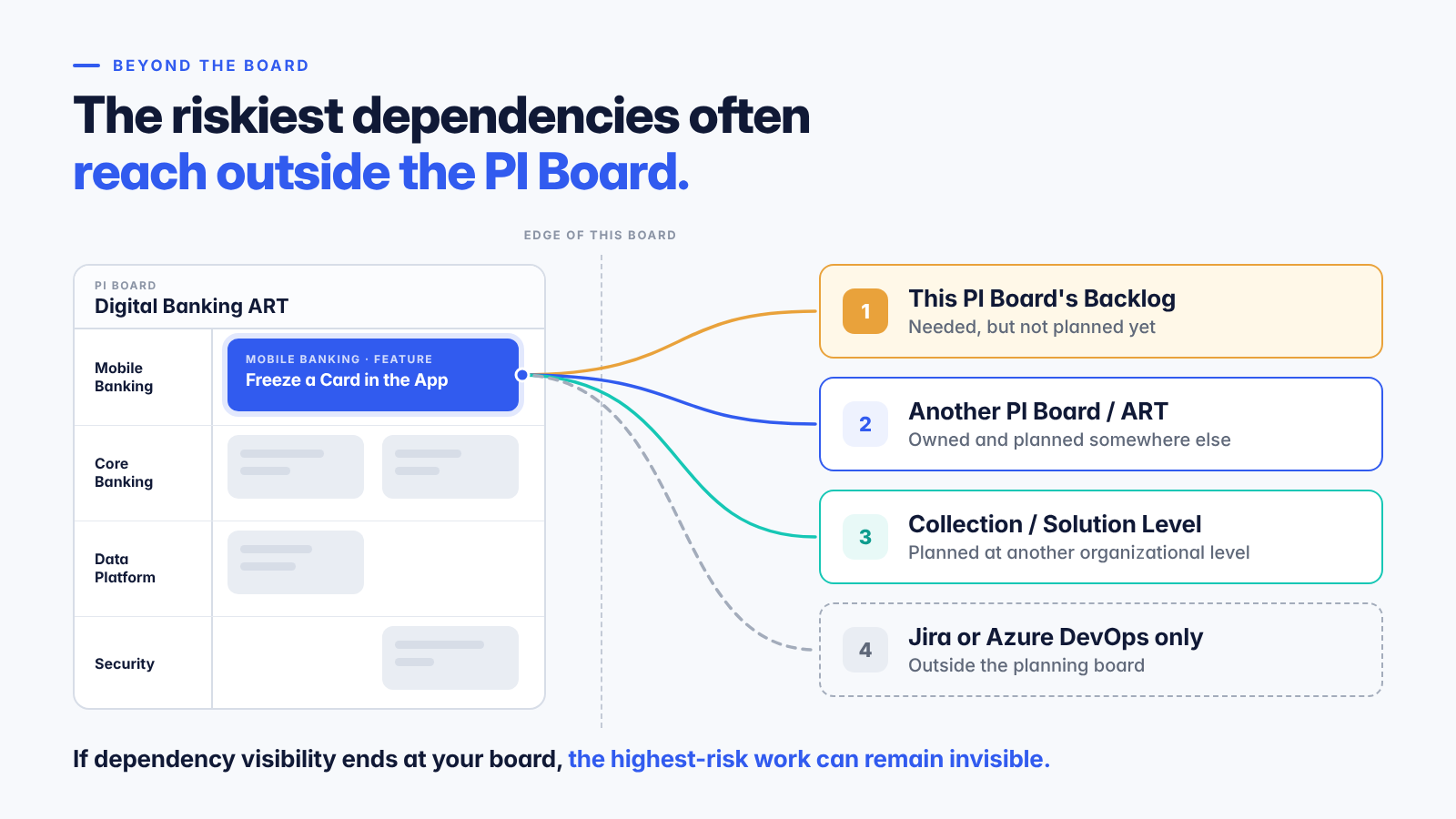
The other side may be:
- in this PI Board's backlog, needed but not planned yet
- on another PI Board or ART, with another team and another planning context
- in a collection or Solution-level backlog
- only in Jira or Azure DevOps, outside the planning board entirely
If dependency visibility ends at the edge of your board, the most important risk may be the work you cannot currently see.
3. Reverse dependencies: the work is planned, but in the wrong order
Core Banking eventually pulls the API into the PI.
Problem solved?
- Not quite.
- The API lands in Sprint 5.
- Mobile Banking needs it in Sprint 3.
A reverse dependency occurs when the work that must be delivered first is planned later than the work waiting for it. In PI Planning, that means both sides can look planned while the delivery sequence is still impossible.
Both items are now visible. Both teams have planned them. The dependency exists. Yet the sequence makes the plan impossible.
This is exactly the kind of issue that can survive a planning event because every individual card looks reasonable in isolation.
The risk appears only when the two plans are compared.
A dependency review therefore needs to ask more than whether both sides are planned. It needs to ask whether they are planned in the right order.
One link can hide an entire dependency chain
There is another problem.
- The Card Services API is not independent either.
- It depends on a Data Platform Change.
- The Data Platform Change depends on a Security Review.
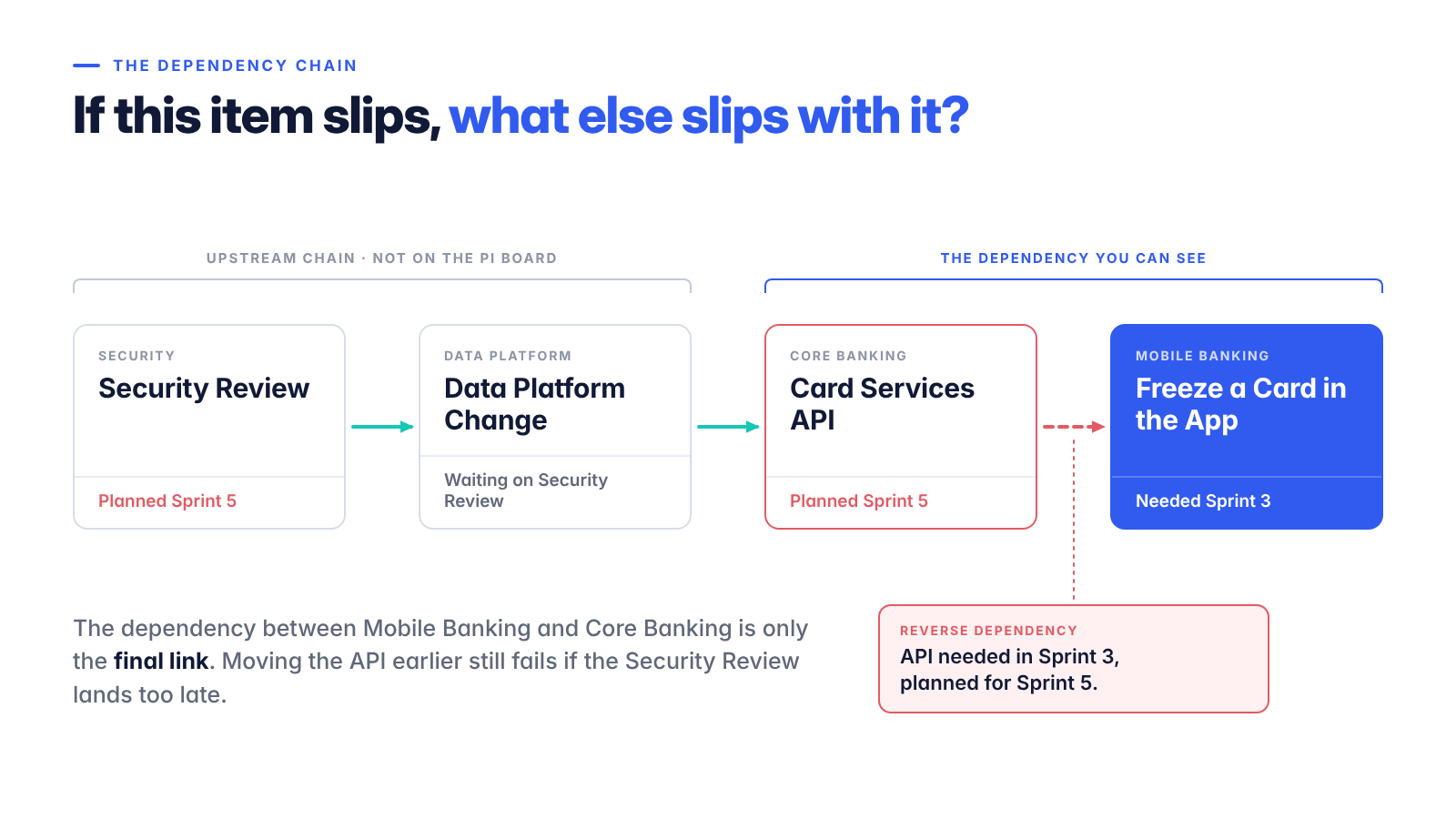
So the real delivery path is:
Security Review → Data Platform Change → Card Services API → Freeze a Card in the App
Now the Mobile Banking Feature is no longer waiting on one team. It is exposed to a chain of commitments across Security, Data Platform and Core Banking.
Even if Core Banking moves the API from Sprint 5 to Sprint 3, the plan is still not credible if the Security Review is scheduled too late.
This is why the first dependency line is often the least interesting part of the problem.
A Program Board or ART Planning Board shows the dependency you know about. A dependency chain shows what that dependency is connected to.
Before committing to a critical Feature, product owners and RTEs need to be able to ask:
If this item slips, what else slips with it?
And just as importantly:
What upstream work could make this item slip before our team even starts?
When cross-team dependencies extend beyond the Program Board
At scale, planning boundaries and delivery boundaries are rarely the same.
Some dependencies stay inside one ART. Others become cross-ART dependencies: one Agile Release Train needs work from another. Dependencies can also reach a Solution Train, platform team, shared service, central architecture or security group, an external partner, or an item that exists only in Jira or Azure DevOps.
That creates a visibility problem.
The team looking at its Program Board or ART Planning Board sees its own plan. The provider may be planning somewhere else, on a different board, with different sprint names and different priorities.
The dependency is therefore not only cross-team. It may be a cross-ART dependency, a cross-board dependency or an external dependency.
A useful dependency view should make that location obvious.
You should be able to tell whether the other item is:
- planned on this board
- still in this board's backlog
- planned on another board
- sitting in another board's backlog
- in a collection or Solution-level context
- only in Jira or Azure DevOps
That placement is not decoration. It changes the action you take.
A backlog dependency means the work may still need to be planned. A cross-ART dependency means coordination across Agile Release Trains. An external dependency may require a shared service, supplier or group outside the ART. An item only in Jira or Azure DevOps may mean the provider is not part of the same planning process at all.
Dependency clusters reveal a different kind of risk
The Card Services API turns out not to be a one-off problem.
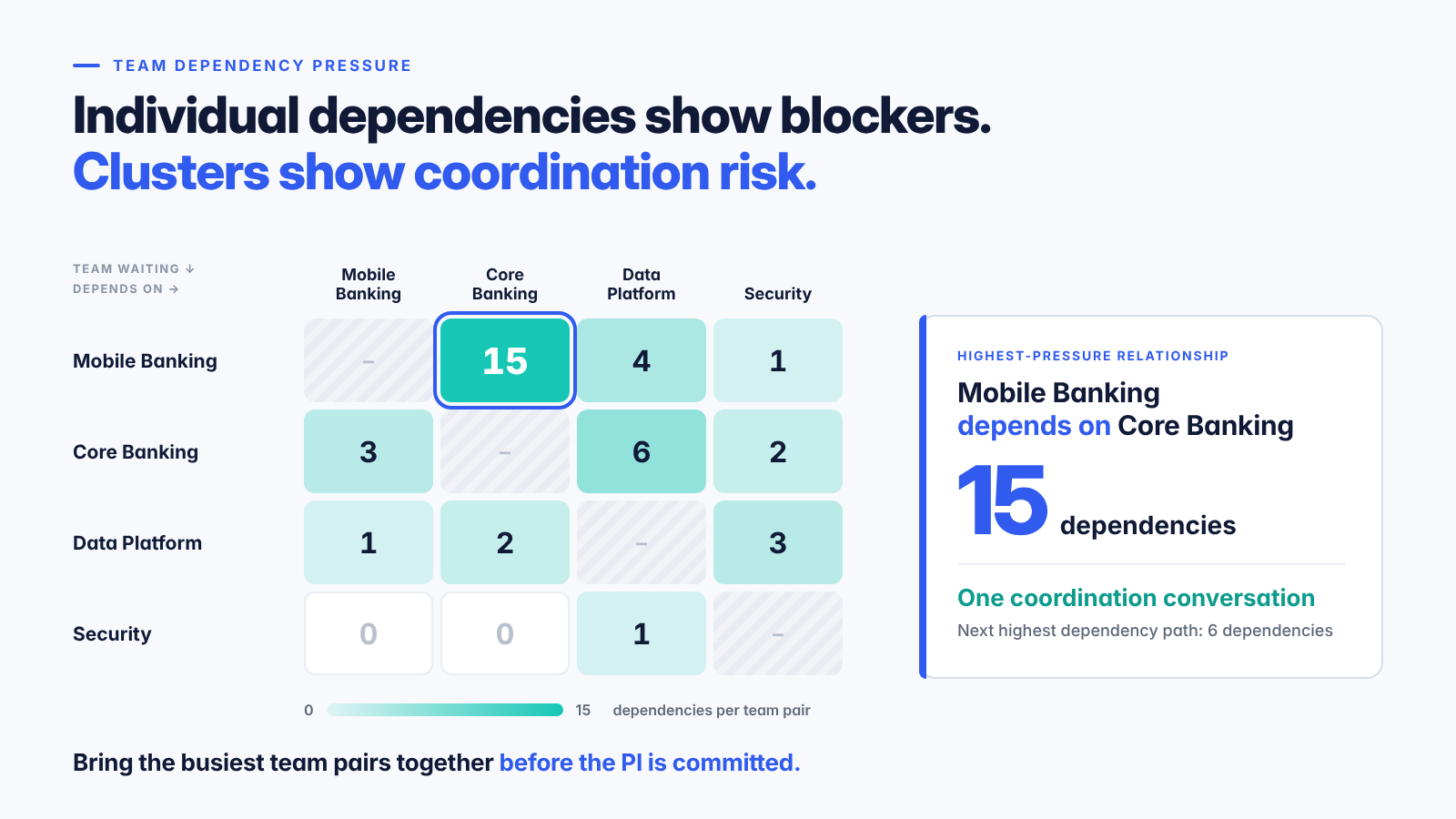
When the RTE looks across the PI, Mobile Banking is waiting on Core Banking for 15 different dependencies.
That changes the conversation.
Fifteen dependencies between two teams are not fifteen unrelated problems.
They are one coordination relationship that deserves attention.
A dependency list is good for managing individual commitments. A team-to-team view reveals something different: where dependency pressure is accumulating across the system.
If Mobile Banking depends on Core Banking fifteen times, while other team pairs have one or two dependencies, the RTE has learned something useful before the PI begins.
Those two teams probably need:
- an explicit coordination session
- agreement on sequence and capacity
- clarity on which dependencies are genuinely critical
- a shared view of the dates that matter
Individual dependencies show blockers. Clusters show coordination risk.
What better cross-team dependency management looks like
Good cross-team dependency management does not replace Jira or Azure DevOps.
It builds on the links that already exist there and adds the planning context teams need around them.
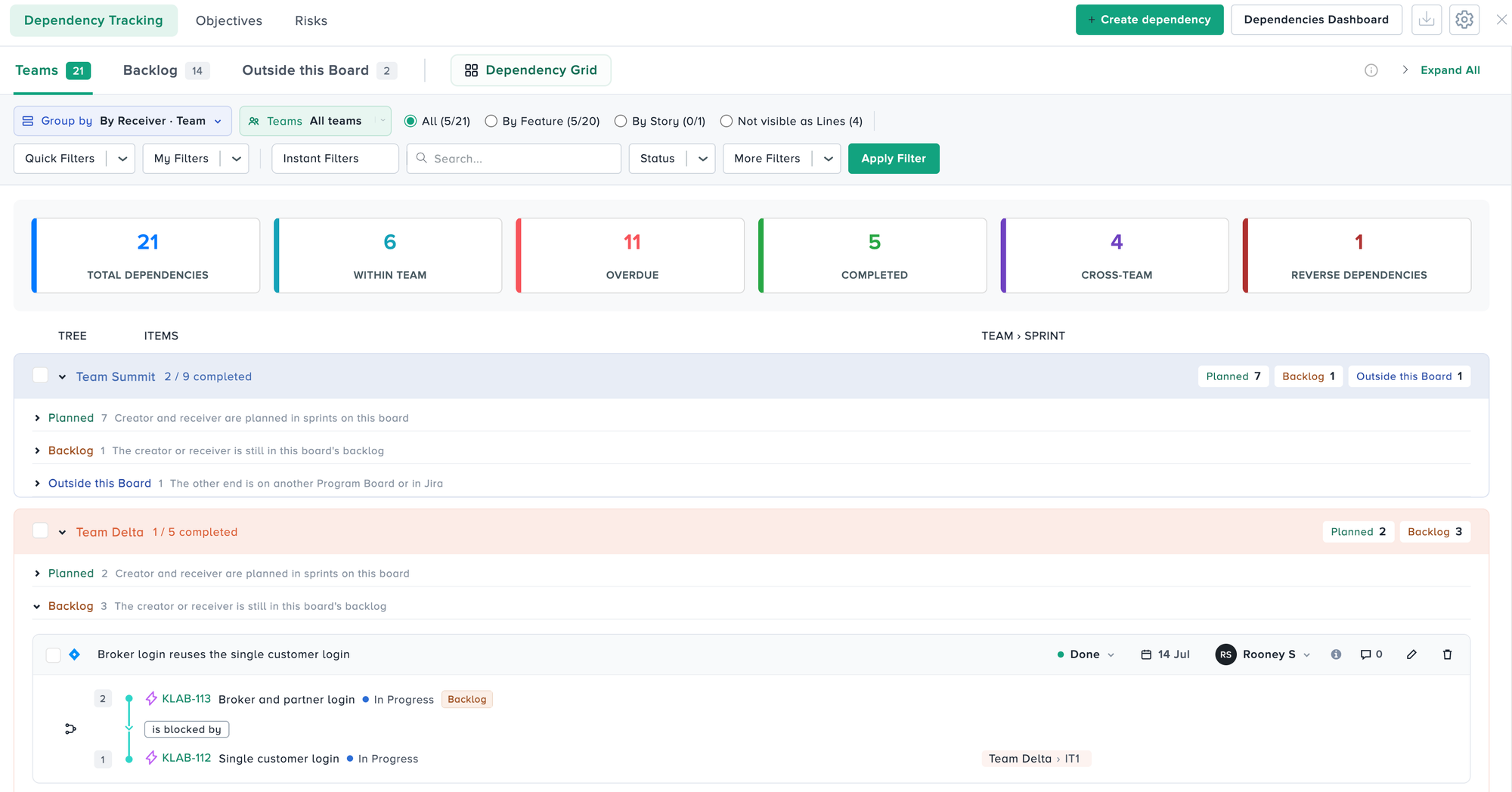
In Kendis, PI Board Dependencies keeps the same dependency connected to the underlying Jira or Azure DevOps items while adding the planning context needed for ownership, sequencing and follow-up.
On the Kendis PI Board, the Mobile Banking dependency could show:
- the dependency's status
- a responsible person
- a target resolution date
- comments and conversation
- whether the other item is Planned, in Backlog, or Outside this Board
- where the other item actually lives
- whether the sequence creates a reverse dependency
The Dependency Tree can then follow the full dependency chain beyond the Card Services API to the Data Platform Change and Security Review, even when those items sit across boards or only in Jira or Azure DevOps.
The Dependency Grid and Team map reveal the 15 dependencies between Mobile Banking and Core Banking as a team-level coordination issue rather than fifteen isolated rows.
Across a broader collection, the Dependency Explorer extends dependency tracking across multiple PIs, with views for overdue, reverse, cross-team and other dependency patterns.
The important principle is simple:
Keep the delivery link as the source of truth, then add the planning visibility around it.
A better cross-team dependency review before PI commitment
At the next PI Planning, the RTE does not simply ask teams whether their red strings are drawn.
The dependency review follows a deliberate sequence.
1. Check the planned dependencies
Are both sides planned, and are they planned in the right order?
Mobile Banking and Core Banking confirm that the API will be ready before the mobile Feature needs it. Reverse dependencies are fixed before commitment.
2. Review dependencies involving backlog work
Which Features are waiting on work that has not been planned yet?
Either the provider commits to the work, or the dependent Feature changes its plan.
3. Check cross-ART and external dependencies
Which dependencies reach another ART, another planning board, a collection, a shared service, an external group, or a team working only in Jira or Azure DevOps?
Make ownership explicit before everyone leaves the planning event.
4. Find the busiest team relationships
Which teams depend on each other repeatedly?
Bring those teams together while there is still time to adjust sequence, scope or capacity.
5. Follow the chain on critical Features
Do not stop at the first dependency.
For the most important Features, follow the upstream and downstream chain far enough to understand what can actually move the date.
6. Add ownership and target dates
Every dependency that matters needs someone responsible and a date that says when the commitment must be resolved.
During the PI, the teams keep the status, owner, dates and conversation current from whichever dependency view they use.
The review is no longer about confirming that lines exist.
It is about making sure the commitments behind those lines are credible.
The red string was never the point
The physical Program Board, today's ART Planning Board, was powerful because it forced people to talk.
The string on the wall was not sophisticated, but everyone could see the dependency and the two teams could stand in front of it together.
At scale, that conversation is harder.
The other team may be on another ART. The item may be in a backlog nobody in the room can see. The work may depend on another team again. The delivery system may know the link, but not the owner, target date or planning context.
The Card Services API did not fail because nobody drew the line.
It failed because the organization could not see enough of what sat behind the line.
Dependencies do not slow a PI down. Unmanaged dependencies do.
The goal is not to eliminate every dependency. That is unrealistic in a large organization.
The goal is to make dependencies visible early enough, owned clearly enough, and connected deeply enough that teams can make a better plan before the delay spreads.
Want to go deeper? Read the full PI Board Dependencies guide and Dependency Explorer guide for the detailed Kendis workflows.