PI Planning
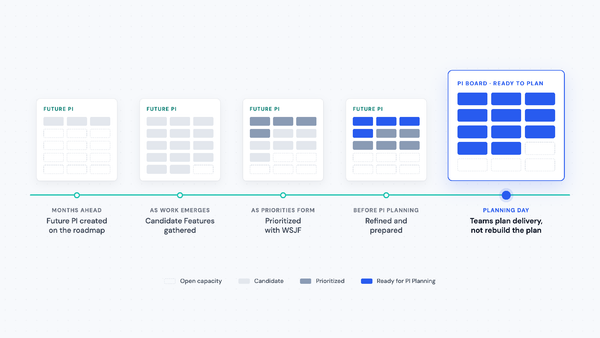
From Roadmap to PI Board: One Continuous Planning Flow
Your next PI can take shape continuously, long before the planning event begins.

PI Planning
Your next PI can take shape continuously, long before the planning event begins.
PI Planning
Over the years, advancements in ALM tools have significantly changed how organizations approach PI Planning. Teams now have access to more structured backlogs, real-time updates, dependency tracking, and planning artifacts than ever before, with tools that have made it possible to plan across dozens of teams and hundreds of
PI Planning
If you are running SAFe® or Big Room Planning in 2025, you already know the biggest pain point isn't the event itself—rather the post event cleanup. The "Post-PI Hangover" is real. It’s the week-long struggle where Release Train Engineers (RTEs) and Product
PI Planning
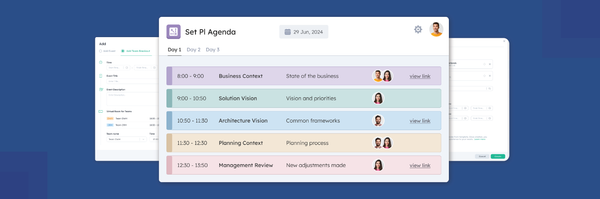
PI Planning is integral to the Scaled Agile Framework (SAFe). Typically it is a two-day event however, with new ways of remote working, PI Planning can last for more than two days. Each day follows an agenda of planned events. Ideally, it is best to have it face-to-

PI Planning
The last event that wraps up the Scaled Agile Framework’s (SAFe) PI Planning, is the PI Planning Retrospective. Despite being the final event on the agenda, its significance cannot be understated. The goal of the Planning Retrospective is to reflect on the PI Planning process, capture feedback, and identify

PI Planning
Kendis suggests reserving time to discuss Testing and Release strategies during the PI Planning event. Testing is a foundational and crucial aspect of software development that helps create high-quality and robust software to provide a trouble-free experience to the end user. Without it, the process of developing software
PI Planning
Planning Adjustments take place after the Draft Plan or Management Review and are usually the first event of Day 2 if you are following the two-day SAFe PI Planning. What are Planning Adjustments? Planning Adjustments are done to share any updates and communicate any high-level changes that may

PI Planning
As the dust settles after the exhilarating event of PI (Program Increment) planning, teams brace themselves for the journey ahead. PI planning marks the beginning of a new increment, filled with ambitious goals, collaborative efforts, and a shared vision. However, as the saying goes, The toughest challenges often reveal themselves
PI Planning
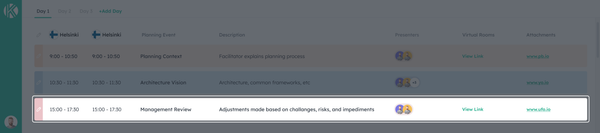
The event that concludes the first day of the PI Planning Agenda is called the Management Review. What is a Management Review? The Management Review aims to provide a platform for team leads, managers, and stakeholders to openly discuss any questions, challenges, or concerns regarding the PI Planning. The common

PI Planning
The event that shows the results and summarizes the collective efforts of all the teams involved in the Team Break-Out sessions in the PI Planning Agenda, is called the Draft Plan Review. What is a Draft Plan Review? The Draft Plan Review is where teams give short presentations on

PI Planning
As we approach halfway towards the first day of the PI Planning Agenda, after setting the Business Context,Product and Solution Vision, and Architectural Vision, the next recommended event that follows is the Planning Context. What is Planning Context? The Planning Context is when the planning processes and expected outcomes,
PI Planning
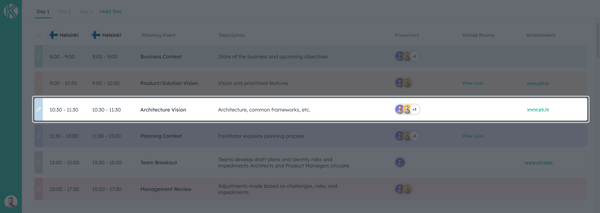
After establishing solid ground for PI Planning in the Scaled Agile Framework in the PI Planning Agenda with the Business Context and the Product and Solution Vision, the third recommended event that follows is the Architectural Vision. What is Architectural Vision? The Architectural Vision focuses on the technical aspects of