AI in PI Planning: How Intelligent Context Moves Tracking to the Next Level

Over the years, advancements in ALM tools have significantly changed how organizations approach PI Planning. Teams now have access to more structured backlogs, real-time updates, dependency tracking, and planning artifacts than ever before, with tools that have made it possible to plan across dozens of teams and hundreds of work items with a level of visibility that was previously unmanageable.
However, as scaling became technically feasible, a new challenge emerged:
Context did not scale at the same pace as data.
PI Planning today generates an enormous volume of information: features, objectives, dependencies, risks, capacity assumptions, and commitments across teams. While tools capture and display this information reliably, they largely stop at representation. Teams are left to manually interpret what this information means, how it connects, and where attention is actually required.
As a result, many PI Planning events conclude with familiar uncertainties:
- Are the objectives meaningfully aligned or just well-formatted summaries of work?
- Which dependencies are critical versus incidental?
- Where is the plan structurally over-committed?
- What issues require leadership intervention before execution begins?
This gap becomes more pronounced as organizations scale. The larger the planning surface, the harder it becomes for any individual, RTE, product manager, or executive, to form a coherent understanding of the plan without significant manual effort. Context is distributed across boards, reports, conversations, and spreadsheets, often requiring post-planning consolidation to explain what was just planned.
Why This Is Not a Process Problem
It is tempting to frame these issues as execution gaps, facilitation issues, or maturity problems. In practice, many experienced organizations face the same challenges despite well-run PI Planning events.
The issue is structural.
PI Planning relies heavily on human synthesis:
- turning detailed work into objectives
- translating plans into leadership narratives
- evaluating dependency risk across teams
- judging planning quality under time pressure
These are cognitively demanding tasks. They do not fail because people are unskilled, but because the volume and complexity of inputs exceed what humans can reliably process in short timeframes.
Where AI Fits - Practically, Not Theoretically
In this context, AI is not valuable because it can generate content. It is valuable because it can operate across the full planning context simultaneously.
AI becomes valuable in PI Planning when it helps teams:
- connect related information across the plan
- surface implications rather than raw data
- translate complex planning artifacts into understandable insight
- reduce manual effort in synthesis and explanation
This is where Kendis positions AI - not as a generic assistant, but as context-aware support embedded directly into PI Planning workflows.
AI-Assisted PI Objective Creation
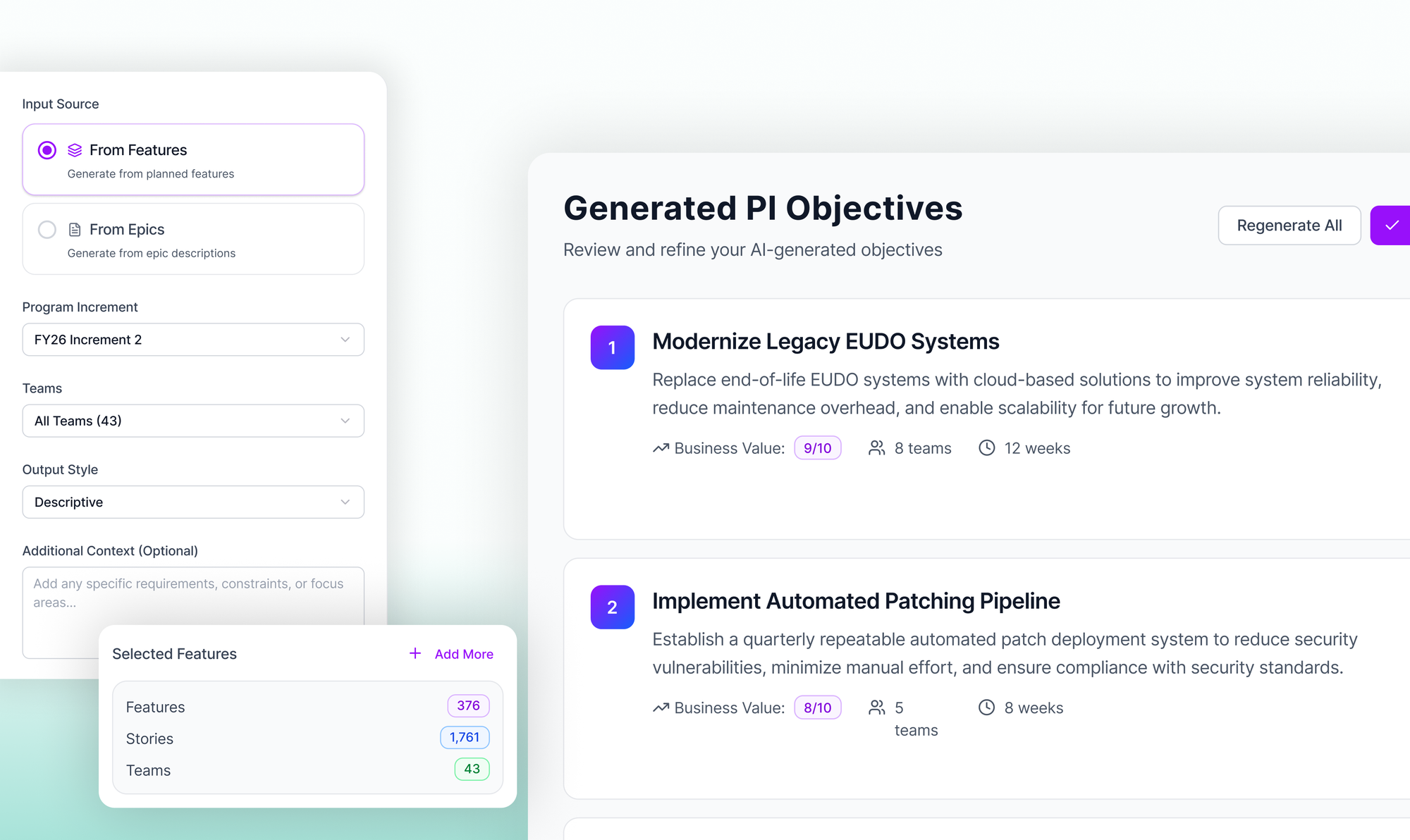
PI Objectives are one of the most critical, and time constrained outputs of PI Planning. Teams must translate multiple features and initiatives into clear, shared intent while balancing business outcomes and delivery commitments.
Kendis AI supports this process by working directly within the objectives context:
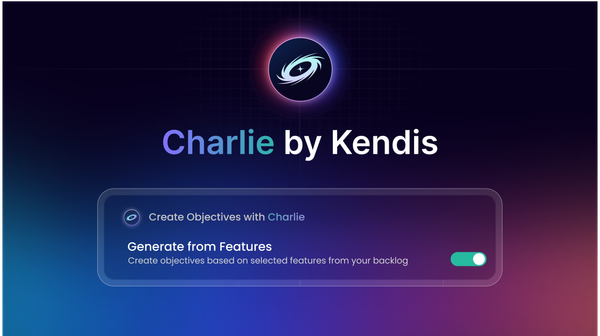
- Features can be grouped automatically based on relevance within the PI plan
- Objective titles and descriptions are generated as a starting point, not a final answer
- Teams can choose whether objectives are outcome-focused or delivery-focused
- Language and level of detail can be adjusted to suit different audiences
- Objectives are created and stored directly in Kendis, without copying content to external AI tools
The result is not “AI-written objectives,” but faster convergence on coherent objectives that remain connected to the underlying plan.
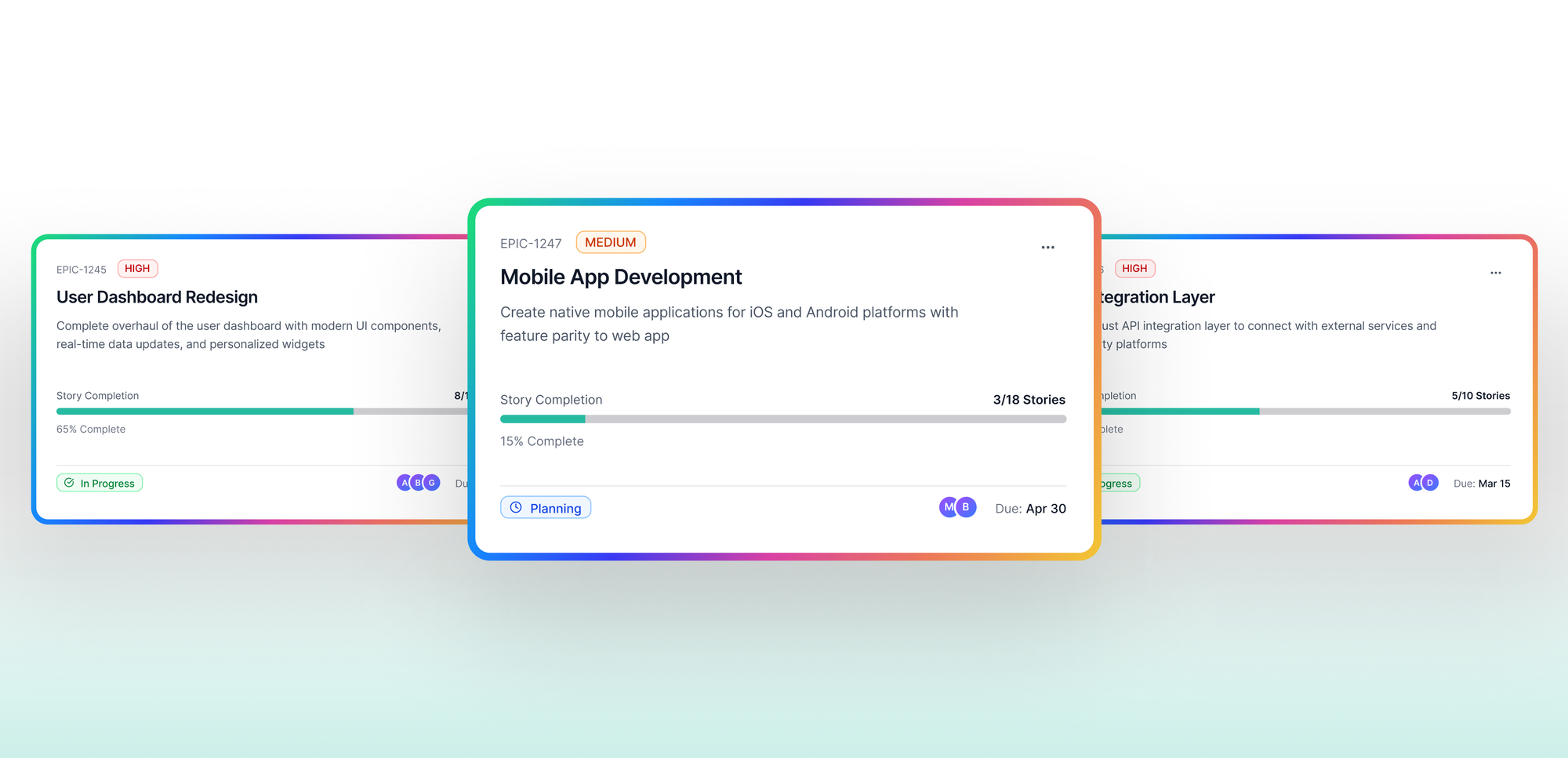
Learn how to create AI-Powered PI Objectives in Kendis
From an execution standpoint, this reduces inconsistency across teams. From a leadership standpoint, it improves clarity without adding overhead.
AI-Powered PI Planning Reports
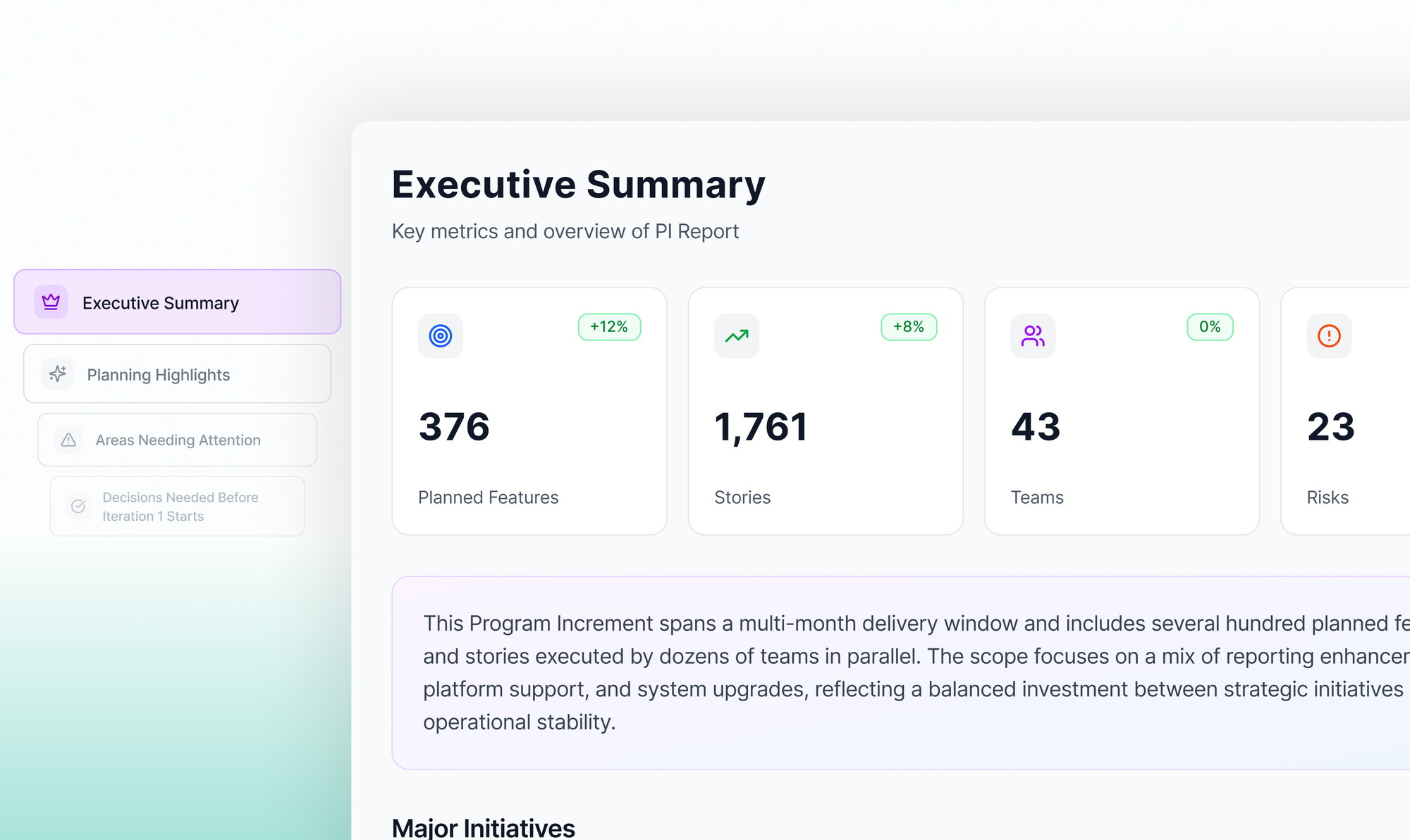
PI Planning reports traditionally summarize artifacts: boards, numbers, and status indicators. While accurate, these reports often assume deep familiarity with the planning process and underlying tooling.
Kendis’ AI-powered PI Planning report is designed to explain the plan, not just document it.
Using context from the PI plan, the report provides:
- A simple executive summary of what was planned
- An assessment of planning health and quality, with justification
- Dependency analysis expressed in understandable terms
- Risk analysis highlighting items that require attention
- Recommended actions before execution begins
Beyond the summary, the report includes:
- high-level planning metrics (teams, planned vs. unplanned work, carryovers)
- team-level planning insights with AI-supported interpretation
- analysis of planned PI Objectives
Because the AI narrative updates based on filters, the explanation always reflects the current view of the plan. The report can also be exported as a PDF, preserving both data and context.
Strengthening Risk and Dependency Clarity with AI
Risk and dependency management are among the most difficult aspects of PI Planning to maintain at scale. Issues are often identified, but not consistently articulated or revisited.
AI-Supported Risk Analysis
Teams can describe a risk scenario in natural language, and the AI assists by:
- proposing a clear title and description
- suggesting mitigation actions
- estimating probability and impact
- analyzing existing risks based on status, history, and related work
This helps standardize how risks are expressed and understood across teams.
AI-Supported Dependency Creation
For dependencies, the AI can generate summaries and descriptions based on:
- the related feature or story
- involved teams
- iterations and timing
These descriptions are visible within Kendis and carried into Jira and Azure DevOps via extensions, improving shared understanding across systems.
Automate Dependency Documentation with Charlie
Closing Perspective:
AI in PI Planning does not eliminate uncertainty, negotiation, or judgment. Those remain human responsibilities.
What AI does change is the cost of understanding at scale. As PI Planning continues to support larger and more distributed organizations, the limiting factor is no longer tooling or visibility. It is an interpretation. AI, when applied with discipline and restraint, can support that interpretation without disrupting existing frameworks or processes.
Book a Demo for Kendis AI