The “Yes” Culture Crisis in Strategic Planning

Why so many organizations execute hard but deliver little—and what changes when focus becomes strategy.
In most enterprises, the ambition behind strategy exceeds the system built to deliver it. Research shows that companies capture, on average, only about sixty percent of their strategies’ potential (Morris & Jamison, 2004). The missing forty percent isn’t lost in bad ideas or slow teams; it disappears in the widening gap between what leadership commits to and what the organization can actually sustain.
That gap is rarely created by recklessness. It grows through a quiet, familiar pattern—the reflex to say yes.
Every quarter brings new priorities: a market opportunity too good to ignore, a compliance need that can’t wait, an executive initiative seeking visibility. Each case makes sense in isolation. But together, they form a portfolio so crowded that no initiative gets the time or capacity required to deliver impact.
The outcome is paradoxical: organizations move faster, yet progress stalls.
Why the “Yes” Culture Thrives
Within agile enterprises, saying yes feels aligned with the spirit of adaptability. Flexibility is celebrated; responsiveness is seen as strength.
The root of the problem lies in how decisions are made across the strategy–execution chain:
- Misaligned planning: Strategy operates in lengthy cycles; delivery moves in sprints of typically 2 weeks. The lag between them invites over commitment. By the time the next quarterly review arrives, business priorities have shifted, but the portfolio is already locked. The only way to accommodate both realities is to say yes twice.
- Political Safety: Portfolios negotiate quarterly trade-offs, trying to balance funding and capacity. Few managers want to be the one who blocks progress.
- Delivery teams iterate weekly, adjusting to emerging data, with little to no insight on what they need to do, why they need to do and what resources would be required to deliver the expected outcome. Consequently, the goal never materializes.
Because these layers run on different clocks, alignment erodes in transit. When new opportunities surface mid-cycle, leaders lack an integrated view of what’s already in motion. Approving another initiative feels easier than confronting the trade-offs of saying no.
The Systemic Cost of Over commitment
The organizational symptoms are consistent across industries.
- Capacity dilution: Teams work across too many initiatives, fragmenting attention and stretching lead times.
- Dependency drag: Interconnected workstreams delay one another because sequencing has been replaced by simultaneity.
- OKR inflation: Objectives multiply faster than they close, reducing the credibility of progress metrics.
- Decision fatigue: Portfolio reviews devolve into reprioritization sessions rather than strategic evaluation.
The deeper consequence is cultural: People stop distinguishing between important and urgent; delivery becomes mechanical rather than directional.
What Focused Organizations Do Differently
1. They Plan Capacity as a Real Constraint—With Buffer for Surprises
Many organizations plan in reverse: initiatives are defined first, and capacity is negotiated later. Mature portfolio leaders invert that process. They begin each planning cycle by making resource timing and deployment visible.
Before committing, they ask:
- When will the right people, funding, or technology actually be available?
- What happens to existing work if this new initiative begins?How much capacity should we reserve to handle mid-cycle surprises or urgent priorities?
The reality of agile delivery is that surprises always occur. Leaving intentional buffer ensures teams can respond to unforeseen needs without derailing the work already in progress. Simply providing full backlogs or overloading teams may satisfy management, but it rarely translates to what will actually be delivered. Modern portfolio leaders do the same, integrating product, delivery, and finance to surface constraints and buffer space before making commitments.
That single shift—from ambition to allocation—is where many portfolios start to mature.
2. They Translate Strategy into Priorities Everyone Can Act On
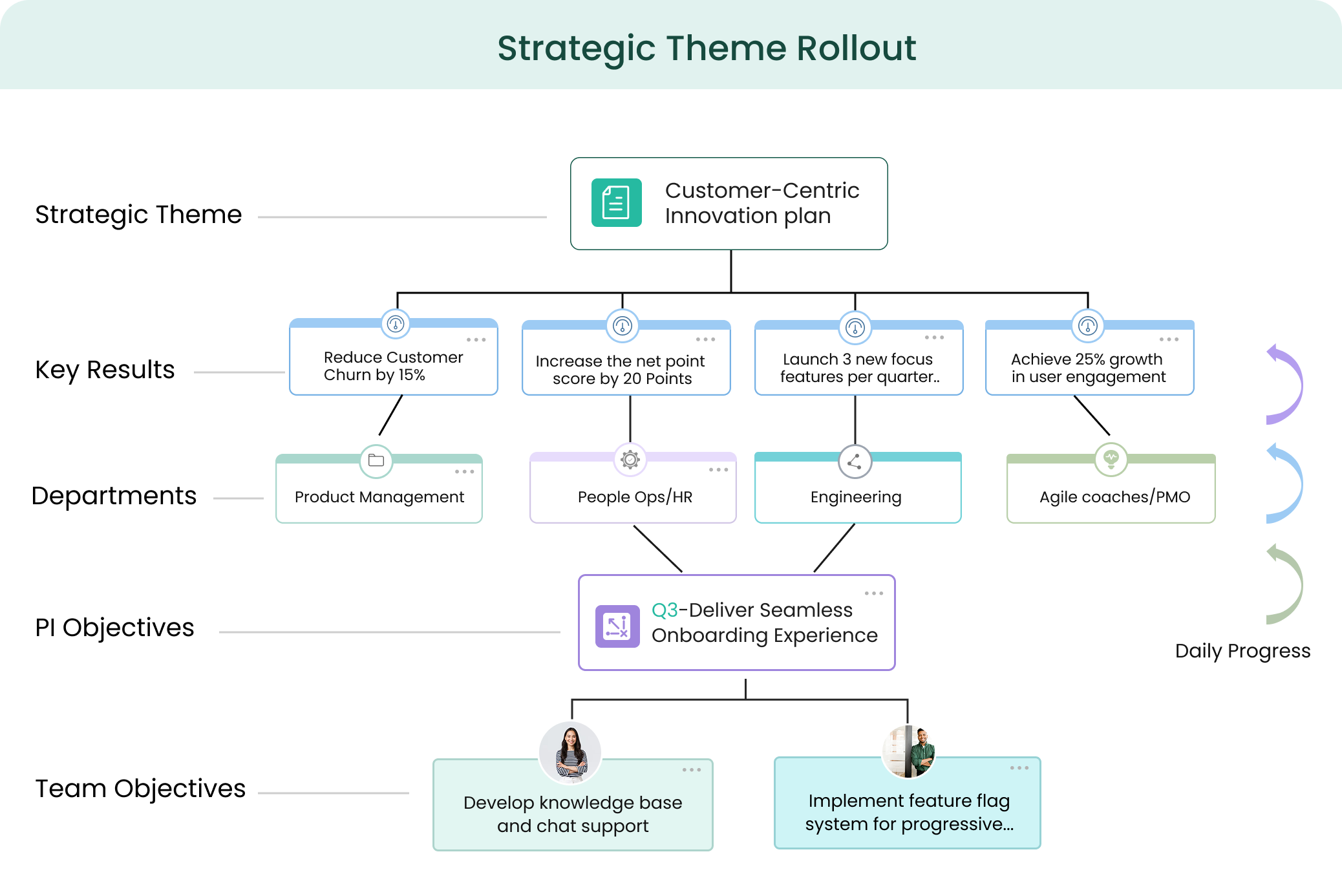
Strategy only works if it guides action. Focused organizations identify a small number of non-negotiable priorities—the work that truly drives outcomes—and make it unambiguously clear what matters and what can be deferred.
This clarity allows teams to make smart trade-offs when surprises occur. Instead of rigidly executing a full backlog, teams understand which work is essential and which can shift without compromising the strategy. Agile portfolios often implement this through Strategic Themes or Global OKRs, reducing fifty competing objectives down to a handful of outcome-driven priorities.
This approach echoes what Bob Diamond, former CEO of Barclays Capital, once described in the Harvard Business Review article “Turning Great Strategy into Great Performance”:
We’ve been very clear about what we will and will not do. We knew we weren’t going to go head-to-head with U.S. bulge-bracket firms… By ensuring everyone knew the strategy and how it was different, we’ve been able to spend more time on tasks that are key to executing this strategy.
That’s the essence of disciplined portfolio management: clarity on what not to pursue so teams can execute decisively on what matters most.
In an agile portfolio, this looks like defining Strategic Themes or Global OKRs that act as unifying signals across teams. Instead of fifty competing objectives, there are five non-negotiable outcomes.
Teams know: if I only have one hour to focus, this is where it goes.
3. They Govern Through Shared Visibility
Effective portfolio governance depends on one principle: shared visibility. Everyone, from executives to delivery leads, should be looking at the same truth — the same capacity limits, dependency chains, and OKR progress. When visibility is unified, alignment becomes inevitable.
This is where Kendis makes a structural difference.
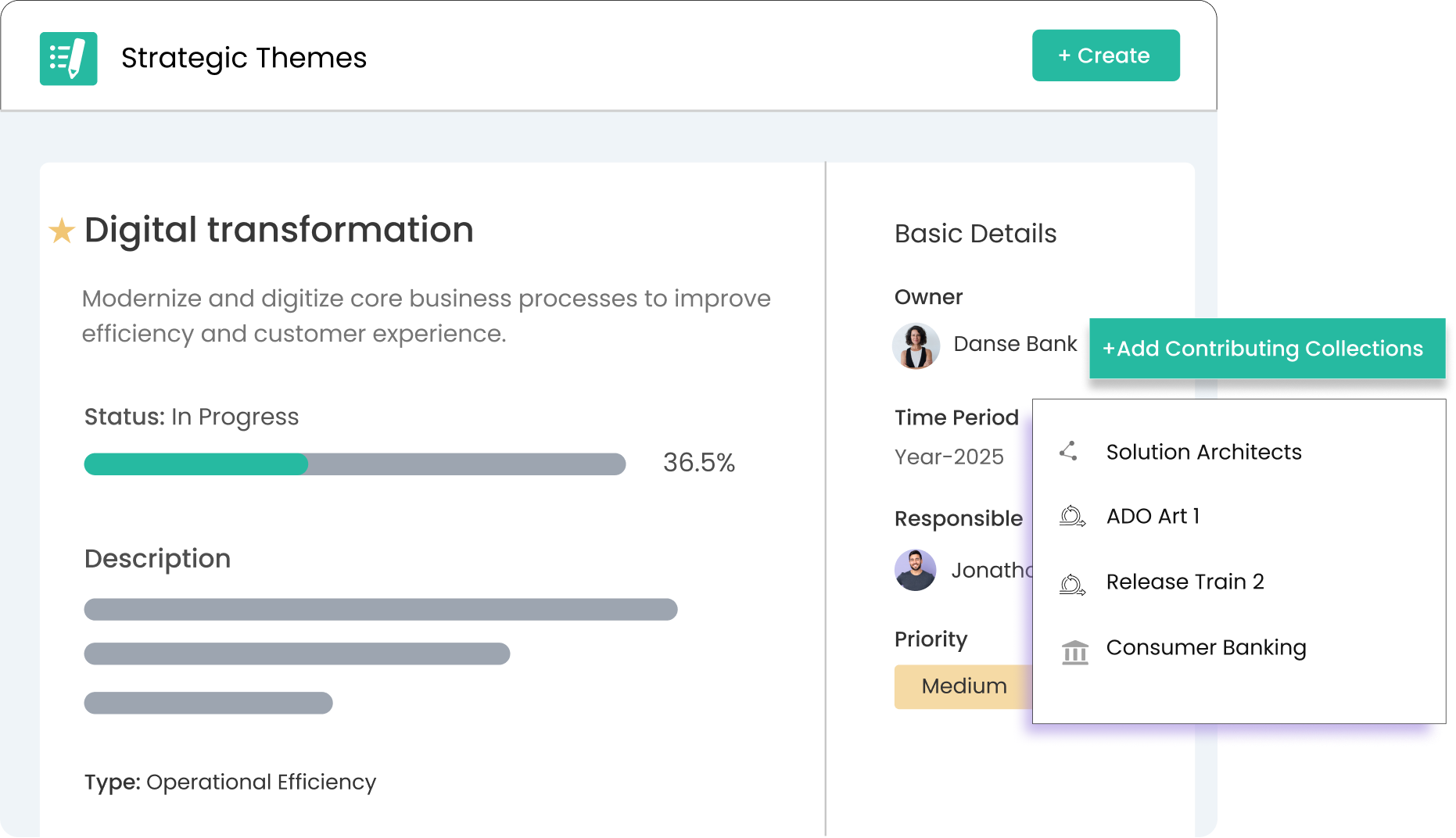
Kendis provides an integrated portfolio layer that connects Strategic Themes, Global OKRs, delivery boards, and real-time dependencies into one cohesive view. Instead of jumping between disconnected tools, leaders can see:
- How each OKR links to strategic intent.
Every objective can be traced back to the theme or investment area it serves, so alignment isn’t just a statement — it’s visible.
- Where the portfolio is overcommitted.
Capacity is no longer a guess. When new work is proposed, Kendis shows its timing, resource demand, and potential conflict points, allowing informed trade-offs before commitments are made.
- What dependencies threaten flow.
Cross-team and cross-board dependencies are automatically visualized, surfacing risks early so they can be resolved before they turn into delivery slowdowns.
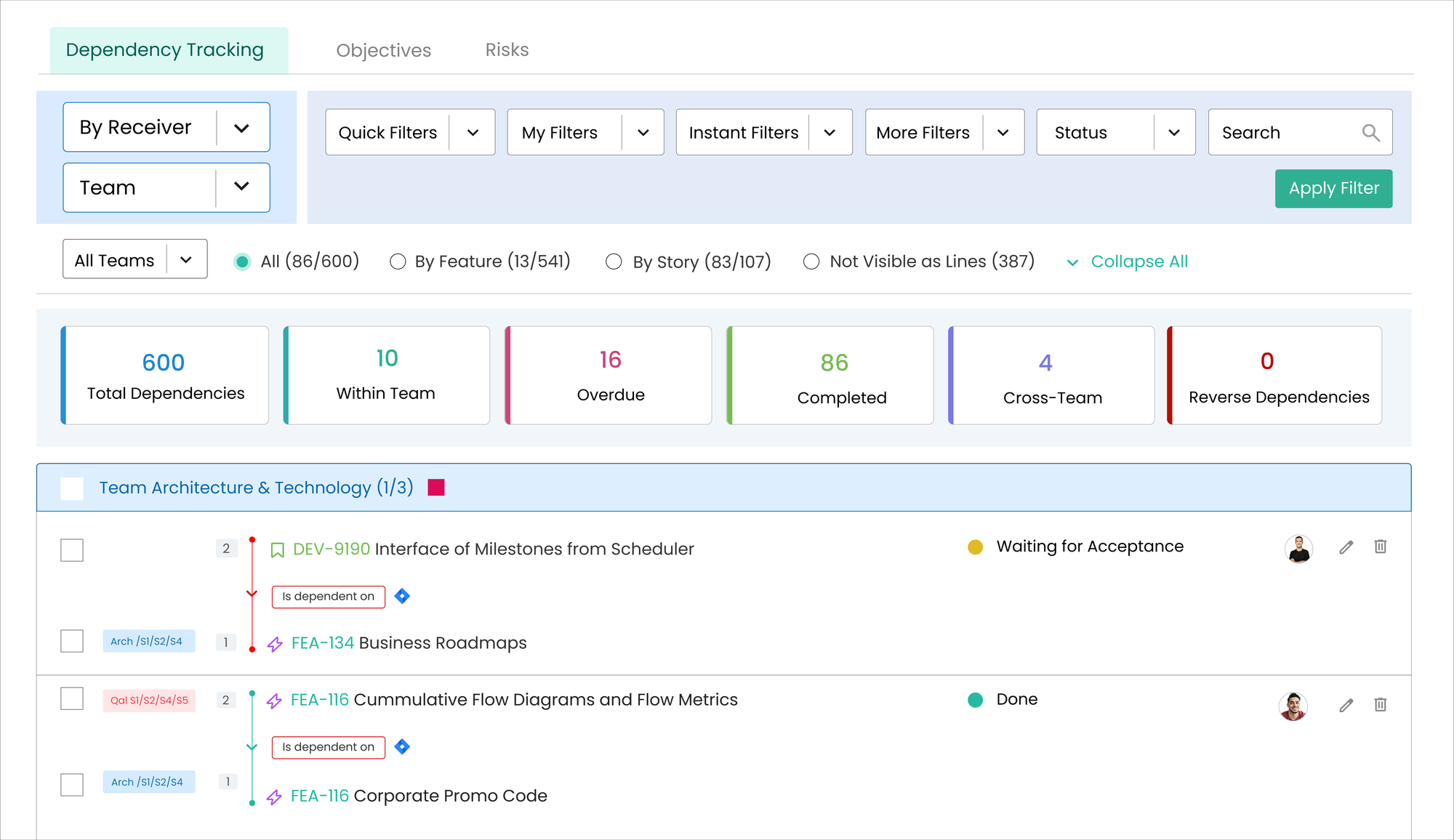
- Whether the current plan still reflects reality.
As work evolves in Jira or Azure Boards, Kendis keeps strategic visibility live. Leaders aren’t reviewing static snapshots; they’re steering based on real-time progress.
Focus Is the Hardest Strategy You’ll Ever Lead
In the end, strategic success isn’t about how many initiatives make it into the plan, it’s about how many make it to completion with measurable impact. The real turning point comes when saying no stops feeling like loss and starts feeling like leadership. Most portfolio leaders understand that clarity is not a luxury; it’s the foundation of performance. And when they have the data to defend focus, they stop negotiating between priorities and start managing outcomes.
That’s when strategic planning grows up — from consensus-building to consequence-driven
Learn how to implement Strategic Themes in Kendis and bring clarity back to your portfolio planning.