The Problem with OKRs That Look Aligned and Why they Fail in Practice
The implementation of Objectives and Key Results (OKRs) is often lauded as a powerful mechanism for strategic execution. Many organizations embrace them with the belief that team objectives linking back to overarching company goals signifies true alignment. This vertical alignment is indeed foundational, providing a clear top-down direction and ensuring that individual contributions channel into the broader organizational vision.
However, a subtle yet significant pitfall often emerges: vertical alignment, while essential, frequently masks deeper misalignments that undermine effective execution.
The Strategic Cascade vs. The Operational Reality
Consider an agile organization as a network of self-organizing teams, each delivering value through sprints and iterations. Vertical alignment ensures each team's backlog items and sprint goals contribute directly to a Product Goal, which in turn supports a broader company Objective. This is vital – it means every team knows why their work matters to the overall vision.
Yet, here's where the illusion often sets in: if these individually optimized teams, while focusing on their own sprint goals, lack a shared understanding of live interdependencies or fail to synchronize their work, the entire product ecosystem can experience friction, bottlenecks, and ultimately, suboptimal delivery.
Defining Horizontal Alignment: The Missing Piece
While vertical alignment focuses on the hierarchical flow of goals, horizontal alignment addresses a different, equally critical dimension: the coordination of goals, objectives, and, crucially, the dependencies between individual teams or departments. It’s about recognizing how the diverse goals of different teams interrelate—whether there are similarities, overlaps, or critical dependencies that require shared understanding and synchronized effort.
In essence, while vertical alignment ensures everyone is pulling in the right direction (towards company goals), horizontal alignment ensures they are pulling together (without clashing or duplicating effort). It fosters crucial collaboration and synergy across interconnected work.
When horizontal alignment is not secured, several problems emerge:
- Lost Synergy & Duplication: Teams might unknowingly work on the same things, wasting effort and missing opportunities for combined impact.
- Interdependency Debt: Unmanaged dependencies become liabilities. Teams proceed with their own vertically aligned goals, unknowingly creating implicit "debts" related to coordination or hand-offs. These "debts" are often discovered late, leading to reactive problem-solving, costly rework, and significant delays. This slows down overall delivery and diverts capacity from value creation to firefighting.
- Friction and Bottlenecks: In an agile environment, this means one team might complete its part of a feature, only for a dependent team to be unprepared, blocked, or working on a conflicting priority. This leads to internal friction and bottlenecks that slow down the entire product development lifecycle.
Critically, OKRs, in their standard application, aren't inherently designed as a tool for tracking complex cross-functional execution. This limitation often leads to a lack of integration and inadequate coordination among teams working on interconnected projects.
A team set their goals, clear and neat, Their vertical flow, quite complete. But sideways, unseen, A conflict convened, Their efforts, then, knew no retreat.
Why We Miss It: Common Pitfalls
Horizontal gaps often arise from:
- Lack of Transparency: Teams simply don't have clear, consistent communication or real-time visibility into other teams' OKRs, progress, or, most critically, their live interdependencies. Without this context, miscommunication and friction thrive.
- Conflicting Priorities and Siloed Thinking: Even when teams are aware of potential dependencies, their own vertically-driven OKRs can create conflicting priorities. Each team is incentivized to hit its specific goals, potentially at the expense of another team's progress, especially if there isn't a clear, shared, horizontally aligned objective overriding individual team goals. This is often rooted in a deeper culture of siloed thinking.
- No Dedicated Alignment Processes: Many organizations treat OKR setting as a discrete, often annual or quarterly, event, or a purely top-down exercise. They lack dedicated forums like cross-team alignment workshops or regular, structured cross-team check-ins. Without these explicit processes, the crucial dialogue and negotiation required for horizontal coordination simply don't happen proactively
Fostering Horizontal Alignment with tools like Kendis
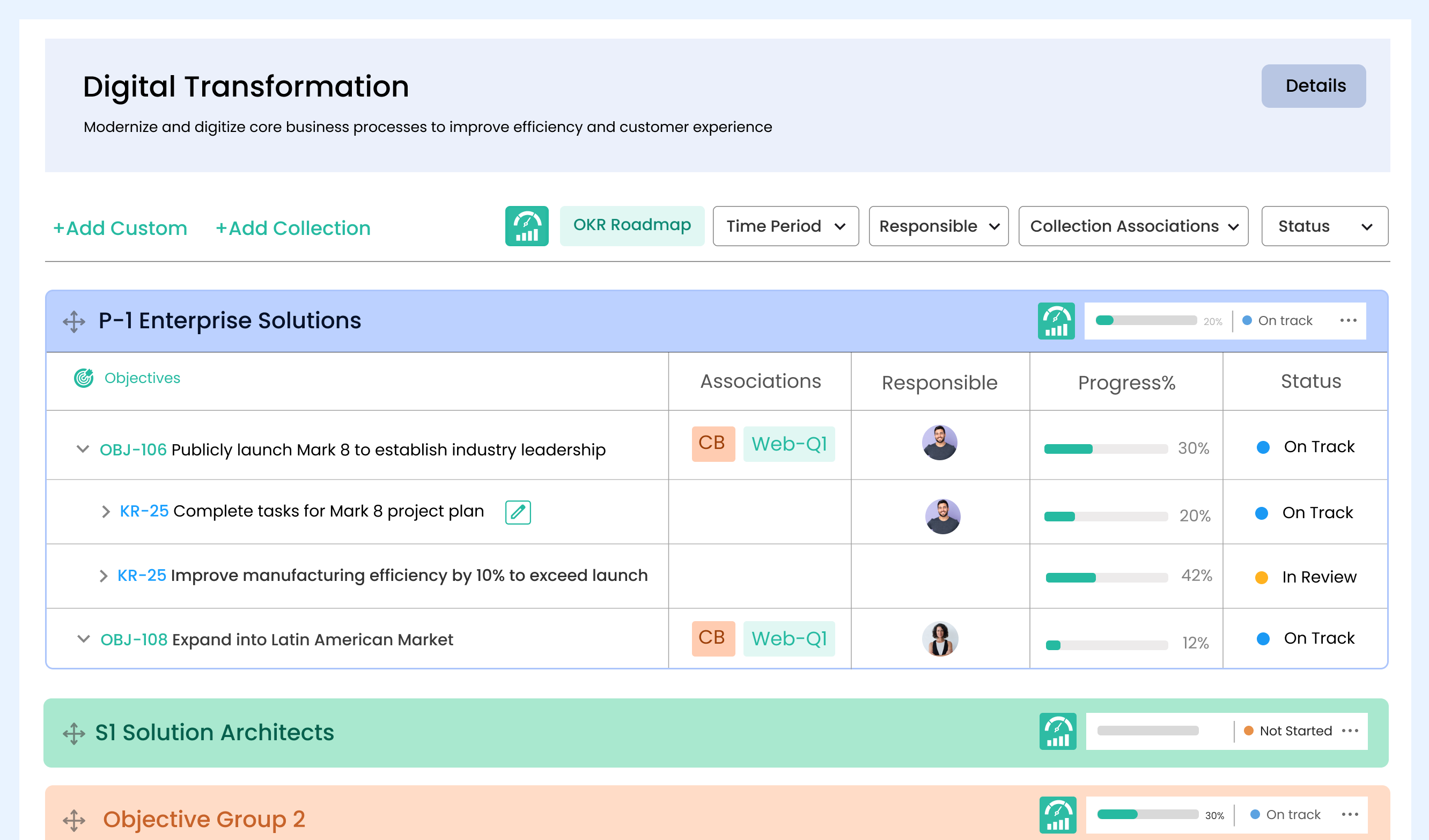
To move beyond the illusion of vertical alignment and achieve genuine organizational harmony, several key strategies are essential including dedicated alignment transparency and shared objectives. This is where a purpose-built platform like Kendis becomes invaluable. Kendis helps bridge the horizontal alignment gap and enhance overall OKR management by providing:
- Dedicated Alignment Processes & Real-time Visibility
Implement regular, structured cross-team alignment workshops or "alignment meetings." Kendis supports these by offering visual Program Boards that allow teams to collaboratively plan, identify dependencies, and manage shared contributions in real time. Its dynamic dashboards provide a single source of truth for OKR progress across the entire organization, highlighting cross-functional contributions and potential bottlenecks.
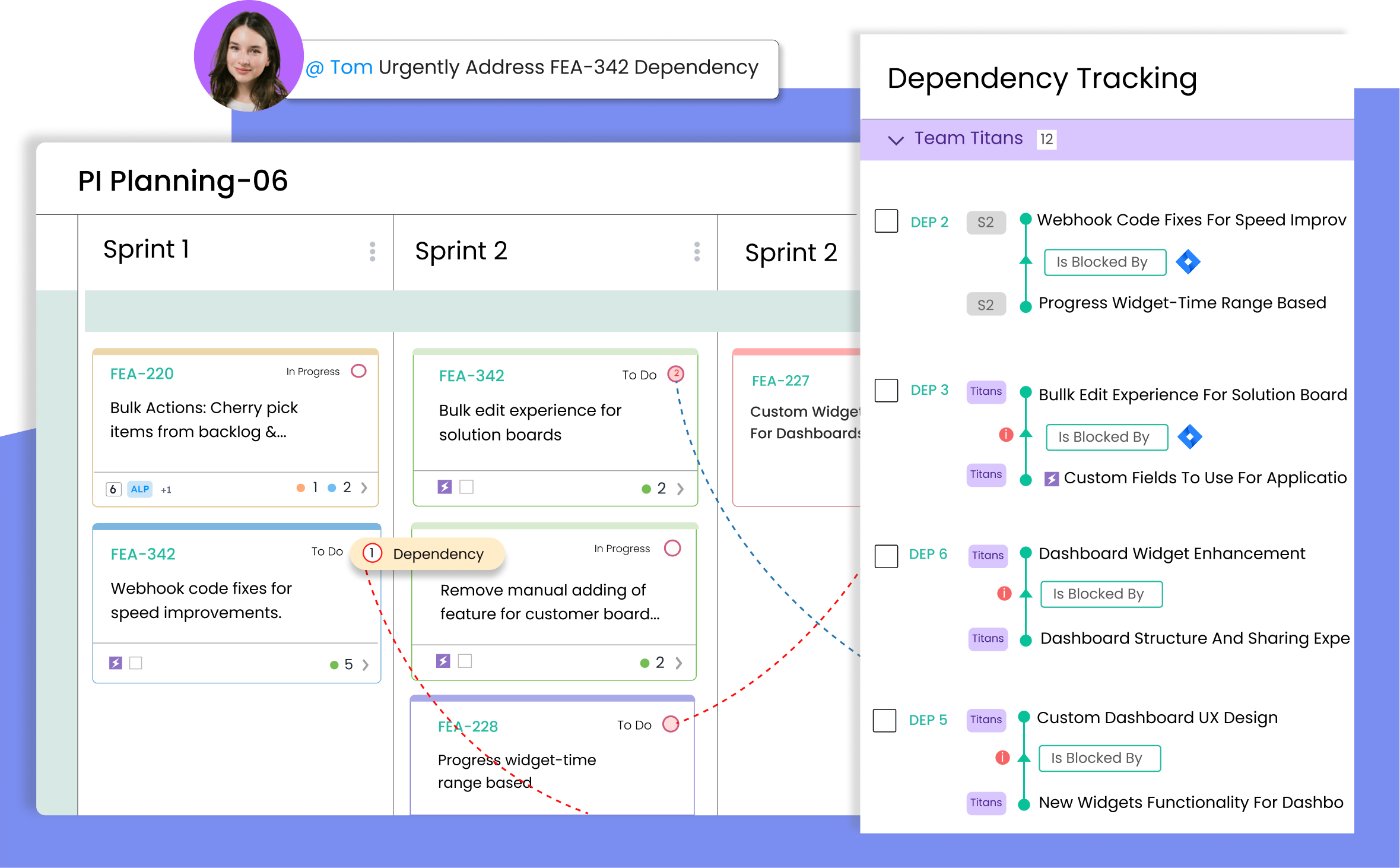
- Explicit Dependency Management
Encourage teams to clearly map how their KRs rely on other teams' work. Kendis excels here by providing tools to visually map, track, and manage dependencies across multiple teams and programs. This makes hidden "interdependency debts" explicit, preventing bottlenecks and enabling proactive risk management.
- Shared Objectives & Coordinated Planning
Actively encourage the creation of shared objectives that inherently require contributions from multiple teams. Kendis facilitates this through features like Program Increment (PI) Planning support, enabling all dependent teams to co-create plans and resolve conflicts before sprints even begin. Its objective-to-feature traceability allows you to link strategic OKRs down to specific work items across different teams, enhancing both vertical and horizontal clarity.
By leveraging platforms like Kendis, organizations can move beyond simply thinking their OKRs are aligned. They can build the necessary visibility and coordination mechanisms to truly achieve horizontal alignment, transforming potential friction into unified progress and accelerating value delivery.
Learn more about our strategic themes & OKR capabilities