Kendis Dependency Extension Changes How Teams Track Dependencies Across Jira and DevOps
If you are already using Kendis for program boards, solution boards, and dependency management, you already understand one core truth: dependencies are unavoidable in scaled delivery. As teams grow, ARTs expand, and delivery spans multiple tools, dependencies stop being simple handoffs and start becoming one of the biggest risks to predictability.
Kendis has always provided strong dependency visualization at the planning level. Program Boards and Solution Boards make it possible to identify, map, and discuss dependencies across teams and ARTs. However, one challenge remained consistent for many organizations: execution happens elsewhere. Jira and Azure DevOps are where teams spend their day, and dependency context often didn’t travel with the work.
The Kendis Dependencies extensions for Jira Cloud and Azure DevOps were created to close that gap — not by creating a second dependency system, but by extending the same Kendis dependency model directly into execution tools.
The Real Dependency Challenge in Scaled Setups
In most scaled environments, dependencies emerge at different levels:
- Team-level dependencies between stories and features
- Program-level dependencies surfaced during PI planning
- Solution-level dependencies spanning multiple ARTs
Kendis already supports this structure through:
- Program Board dependency management
- Solution Board dependency visibility
- Clear provider / consumer relationships
- Visual dependency lines, ownership, and risk indicators
However, execution still happens in Jira or Azure DevOps. The extension now eliminates this disconnect.
One Dependency Model, Shared Across Tools
The most important thing to understand about the Kendis Dependencies extensions is that they do not introduce a new way of managing dependencies. They reuse the same dependency model already present in Kendis — provider, consumer, status, target resolution, ownership, and risk indicators.
What changes is where that information is visible.
A dependency created and managed in Kendis now appears directly inside Jira issues or Azure DevOps work items. This means that dependency context follows the work, rather than staying locked inside planning boards.
Teams no longer have to mentally translate between:
- “What we planned in Kendis”
- “What we are doing in Jira or Azure DevOps”
Both now reflect the same dependency reality.
Dependency Visibility Inside Jira Cloud
With the Kendis Dependencies Extension for Jira Cloud, dependencies are surfaced directly within the Jira issue view using a dedicated widget.
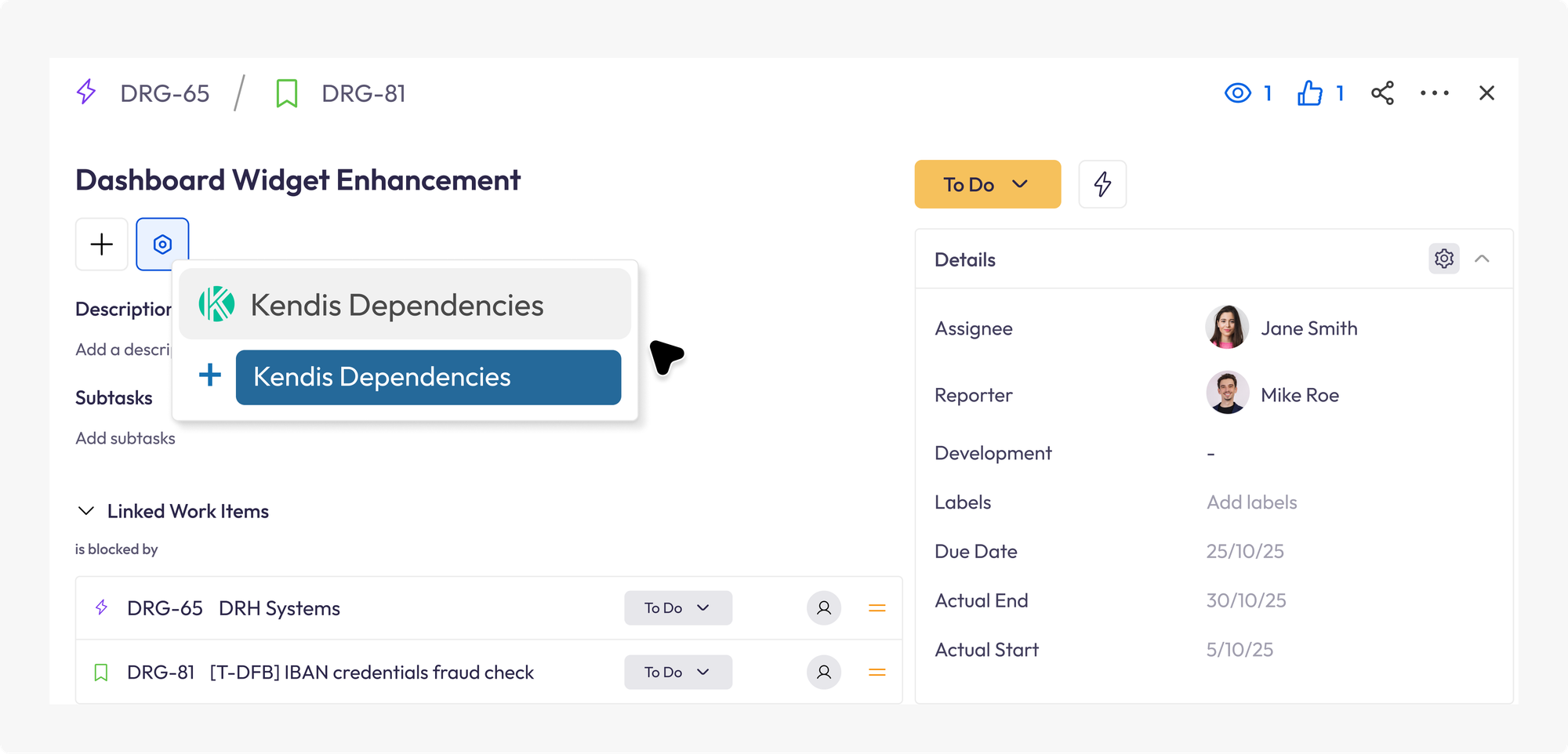
This is significant because Jira’s native issue links are not designed for scaled dependency management. They do not clearly distinguish providers from consumers, do not show dependency risk, and do not reflect program or solution-level context.
The Kendis widget changes that.
From there, teams can:
- See all dependencies linked to that issue
- Understand whether the issue is a provider (1) or consumer (2)
- View dependency status, target resolution date, team, and sprint context
- Identify reverse dependencies that may not be obvious from a single issue
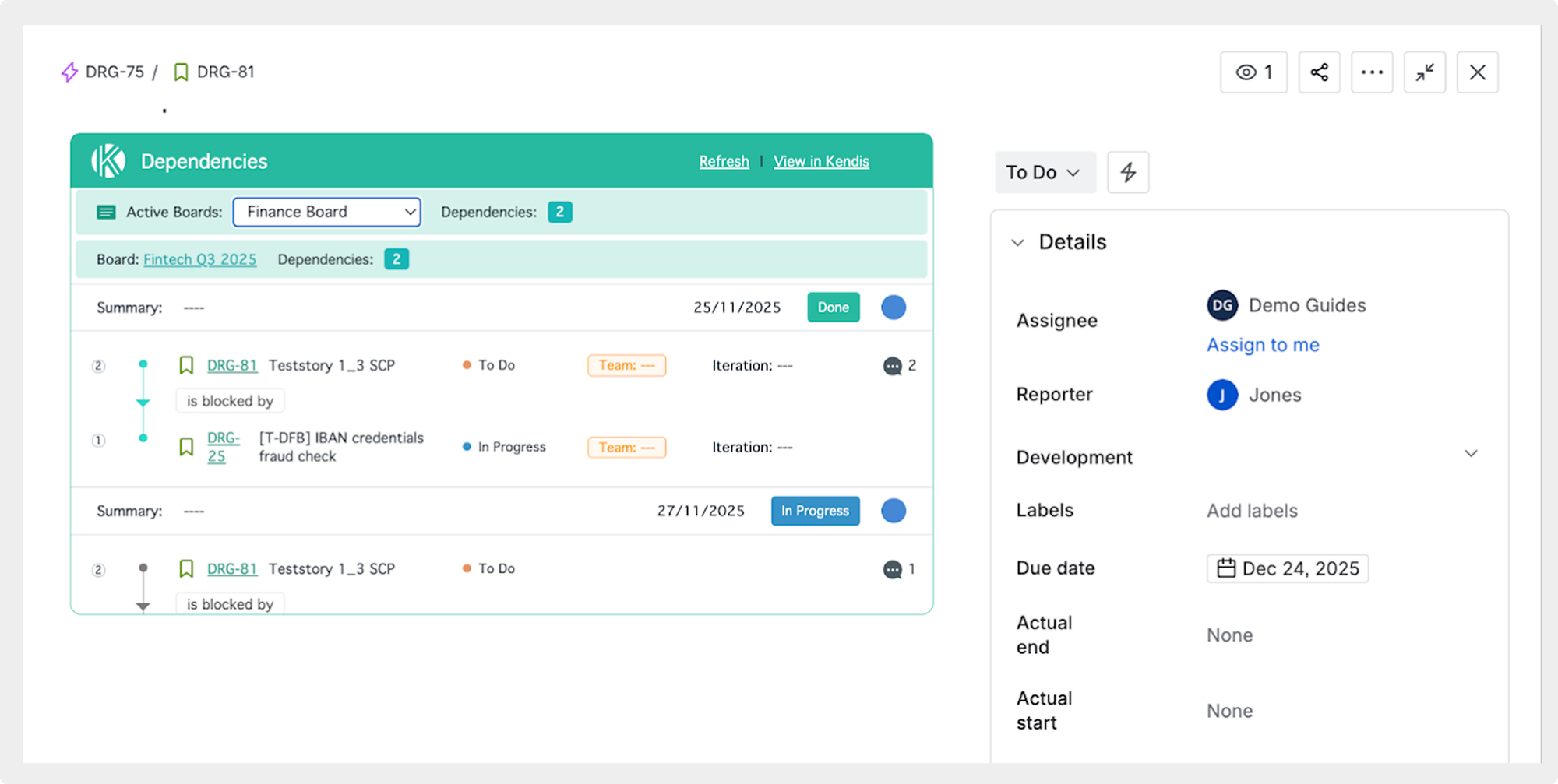
When a team member opens a Jira issue, they can immediately see whether that issue is part of a dependency, what role it plays, which team or board is involved, and whether the dependency is on track. Reverse dependencies are also visible, helping teams understand who is waiting on them — something that is often invisible in standard Jira workflows.
Inside Azure DevOps
Similarly, the Kendis Extension for Azure DevOps makes dependency information available directly within Azure DevOps work items.
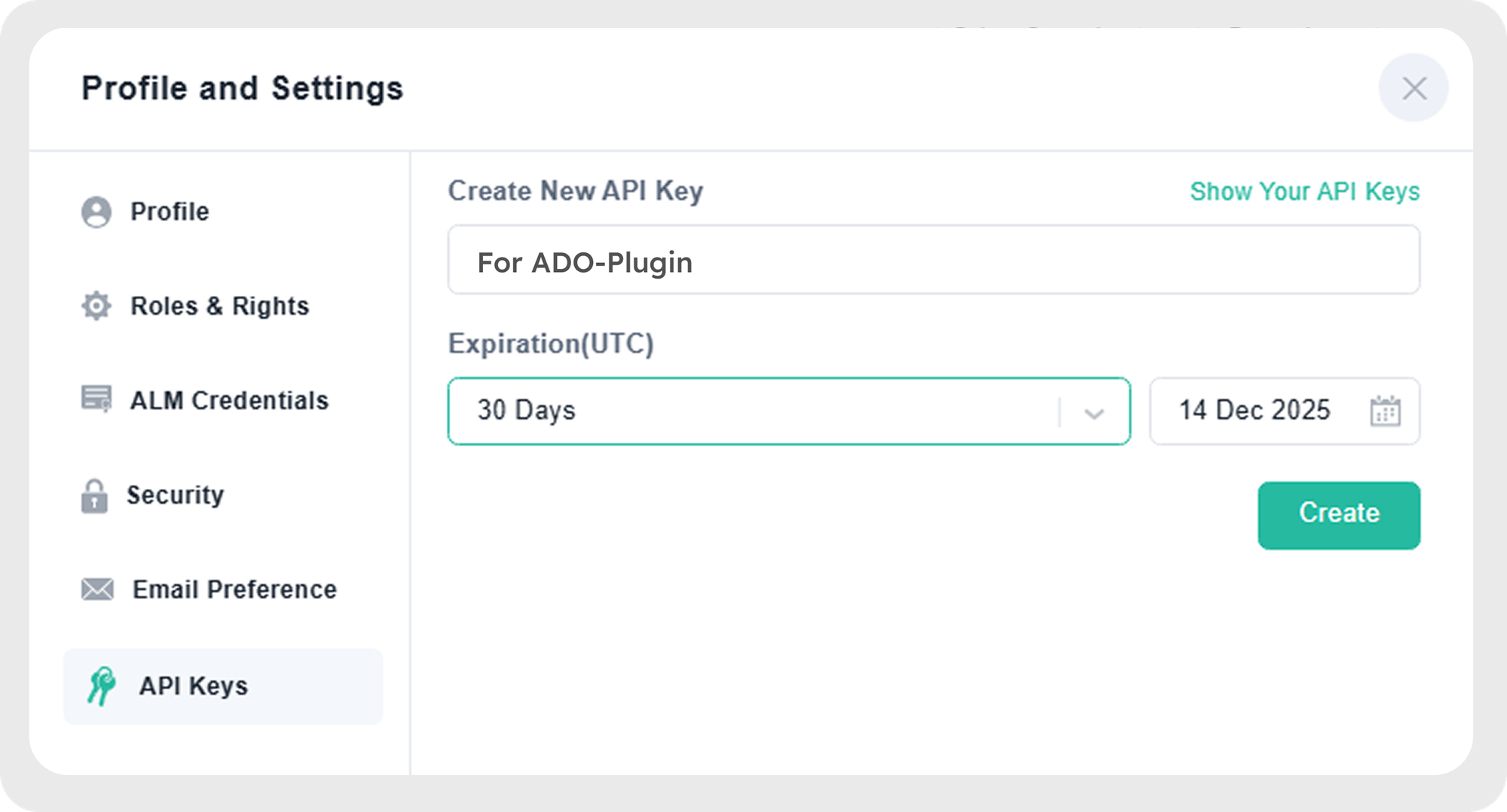
For organizations running mixed toolchains — Jira for some teams, Azure DevOps for others — this is especially impactful:
- Dependencies remain consistent across tools
- No team is “outside” the dependency picture
- Solution-level visibility remains intact
This reinforces Kendis’ role as the central dependency system, while Jira and Azure DevOps remain execution tools.
What This Means for Teams Already Using Kendis
For existing Kendis customers, this extension is not about changing how you plan — it’s about strengthening how you execute.
Teams gain immediate dependency awareness inside their work items. Program leaders gain confidence that what they see on boards reflects real progress. Solution leadership gains visibility that is grounded in actual delivery, not assumptions.
Most importantly, dependency management stops being a separate activity. It becomes a shared, continuous process across planning and execution.
For more on how to enable the dependency extension, visit our help centre
For Jira Cloud Extension